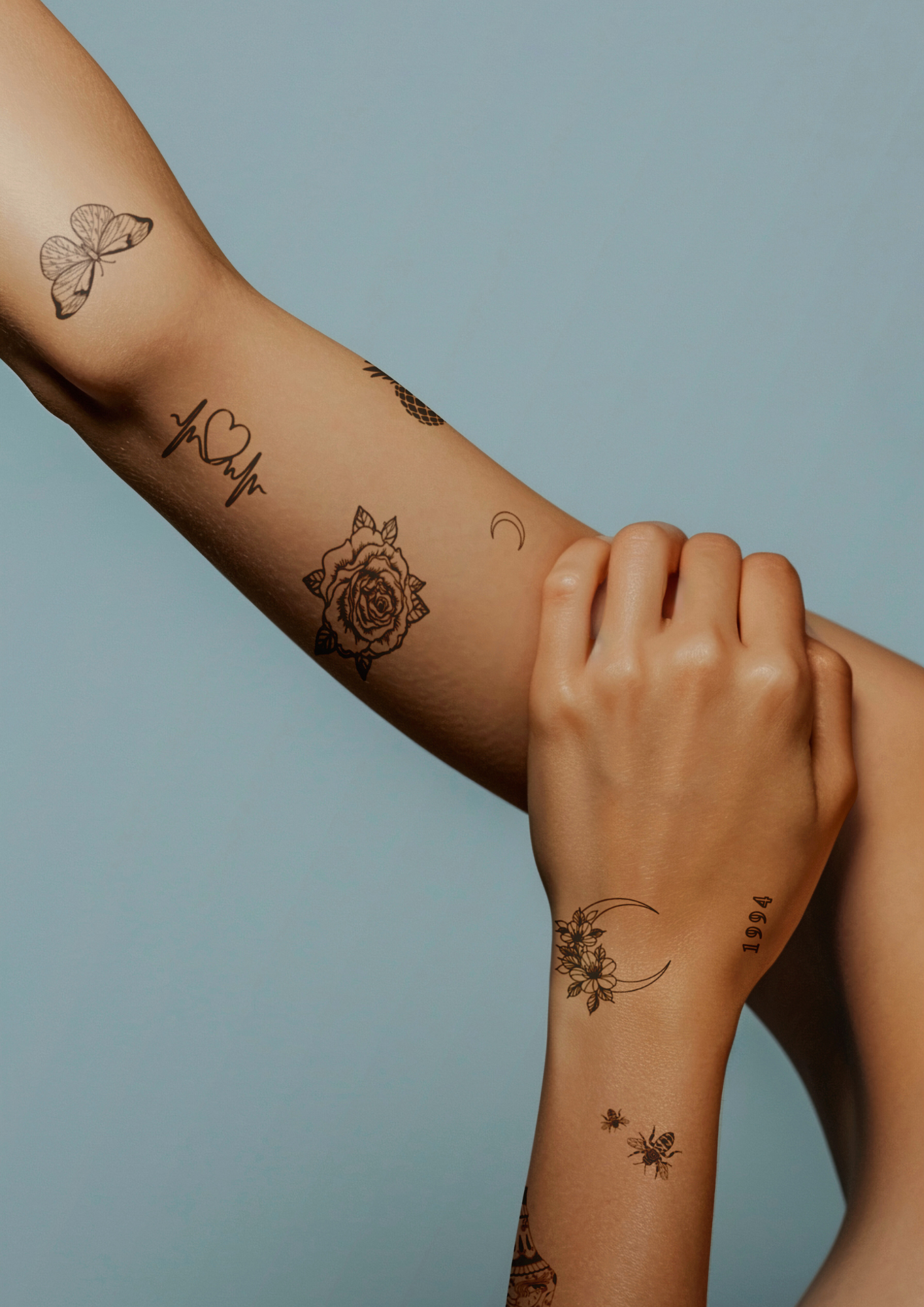


Every summer it's the same story. On beaches in Turkey, Egypt, Morocco and Greece, and at plenty of markets, fairs and festivals here in Britain, street artists offer "black henna tattoos" for a few quid. The colour is intense, it dries in no time and it looks great in holiday photos, so it seems like the perfect souvenir to bring home. It isn't.
So-called "black henna" isn't henna at all. It's a mixture containing PPD (para-phenylenediamine), an industrial chemical dye that has no business being on your skin. The consequences can be serious: blisters, chemical burns, permanent scarring and a lifelong allergy that stays with you long after the holiday.
Below you'll find what black henna really is, what the medical evidence says, why dermatologists have been warning about it for years, and which safer options exist if you want a dark temporary tattoo.
Natural henna isn't the problem
First, credit where it's due. Real henna, used for thousands of years across North Africa, India and the Middle East, is a plant dye made from the leaves of Lawsonia inermis. It stains the skin orange-brown to auburn, it's a cultural tradition and an art form in its own right, and allergic reactions to pure henna are extremely rare.
The trouble starts when someone wants henna to turn black.
Henna never goes black on its own, so to get that colour some suppliers, particularly in tourist resorts and holiday markets, add PPD to the paste. That's when things go badly wrong.
PPD: what it is and why it's banned on skin
Para-phenylenediamine (PPD) is a synthetic dye used in permanent hair colour. Under the cosmetics rules the UK still applies after Brexit, based on Regulation (EC) 1223/2009, PPD is allowed in hair dye at a maximum of 2%, with compulsory warnings on the pack.
Using it in anything that stays on the skin, such as temporary tattoos or body paint, is banned across the UK and the EU.
In practice, nobody checks the dose in the home-made "black henna" pastes sold at tourist spots. Analyses have found PPD concentrations from 2% to more than 15%, left on the skin for hours, which is several times the limit allowed in hair dye, a product that's meant to be rinsed off rather than left to soak in.
What PPD does to your skin
The reaction doesn't show straight away, which is what makes it such a nasty trap. You get a black henna tattoo on holiday, everything seems fine for days, you've probably forgotten about it by the time you're home, and then, anywhere from a few days to two weeks later, the symptoms start.
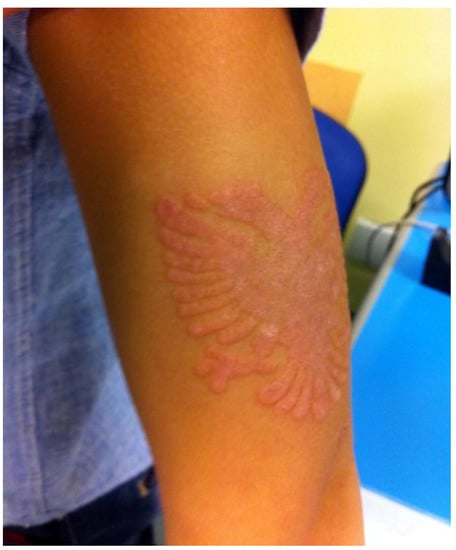
In the short term: intense redness, itching, swelling, and fluid-filled blisters that follow the exact outline of the design. In severe cases the eczema spreads well beyond the tattoo, and some people need oral steroids or even a stay in hospital.
In the long term: permanent scars, and dark or light patches that can last months or years. UK dermatologists see more cases every summer. In a British Skin Foundation survey, 4 in 10 dermatologists said they'd seen a rise in black henna reactions in their clinics.[1]
The worst part: PPD sensitisation is permanent. Once you're allergic, you stay allergic for life. And PPD turns up in a lot of places: hair dye, textile dyes in dark jeans, black rubber, some printing inks. A reaction on holiday can mean never being able to dye your hair again, reacting to a new pair of dark jeans or a set of black rubber gym weights, and for a hairdresser, who handles hair dye all day long, it can put their whole career at risk.
Children are the most at risk
This is probably the most worrying part. According to the British Skin Foundation, 20% of children who have a black henna tattoo risk a serious reaction, and most parents have no idea. The dermatologists surveyed say more than 80% of the reactions they treat involve children under 16.[1]
These tattoos are sold as a bit of holiday fun, a little scorpion on the shoulder or a dragon on the forearm, but children's skin is thinner and lets more through, so the risk of becoming sensitised to PPD is much higher. A YouGov survey found that one in ten British people has had a potentially dangerous black henna tattoo, with 18 to 24-year-olds the most likely to have had one.[5]
How to spot black henna (and walk away)
You're on holiday or at a festival and someone offers you a henna tattoo. Here's what to check.
The colour of the paste. Natural henna is a green-brown paste that leaves an orange-brown stain. If the paste is black or very dark, it isn't henna.
The time it needs. Natural henna has to stay on the skin for several hours, ideally 6 to 12, to develop. If you're promised a result in 30 minutes to an hour, something's wrong.
The result. If the tattoo is jet black straight away instead of orange-brown, there's PPD in it.
The smell. Natural henna smells earthy and herbal, sometimes a little lemony. PPD mixes usually smell of nothing, or of chemicals.
The promised wear time. If you're told it will last more than 3 or 4 weeks, that's PPD at work, not henna.
If in doubt, ask to see the ingredients and ask for the paste to be mixed in front of you, and if the artist refuses or can't answer, walk away. It isn't worth it.
Natural henna, "black henna" and jagua: the real differences
Before we get to the alternatives, here are the three side by side. They give very different results, and above all they carry very different risks.
| Natural henna Lawsonia inermis |
"Black henna" Henna + chemical PPD |
Jagua Genipa americana |
|
|---|---|---|---|
| Paste colour | Green-brown | Black | Dark green, translucent |
| Colour on skin | Orange-brown | Intense black | Deep blue-black |
| Source | Plant (leaves) | Henna + chemical dye | Fruit (juice) |
| How long it lasts | 5 to 14 days | 2 to 4 weeks | 1 to 2 weeks |
| Contains PPD | No | Yes (up to 15%+) | No |
| Safety | Safe | Dangerous | Well tolerated |
| Legal on skin (UK/EU) | Yes | Banned | Yes |
| Allergy risk | Very rare | High, with lifelong sensitisation | Rare (patch test recommended) |
The alternatives that work
If you want a dark temporary tattoo that looks like real ink, natural henna won't do it, because it always comes out orange-brown. Black henna is out. Two options are left.
Jagua. A natural ink made from the fruit of the Genipa americana tree, which grows in Central and South America. It stains the skin a deep blue-black without any chemical dye. The colour comes from genipin, a compound in the fruit that reacts with the proteins in the top layer of your skin, which is why the result looks like a real tattoo rather than something painted on. It lasts 1 to 2 weeks and fades on its own. For a full comparison, read our jagua vs henna guide.

Our tattoos are made with jagua. There are 500+ designs in the full collection, from minimalist pieces and flowers to star signs and tiny finger tattoos, all PPD-free. Have a design of your own? We can print it in jagua ink as a custom jagua tattoo. And if you'd rather draw freehand, there's jagua gel.
Good-quality transfer tattoos. They've come a long way from the cheap transfers of ten years ago. Cosmetic-grade transfers printed with inks that meet UK and EU safety rules last 3 to 7 days and carry no PPD risk. They sit on top of the skin. So they look less like real ink, but they're a safe choice for a party or a festival weekend.

Is jagua safe? The honest answer
This deserves a straight answer.
Jagua comes from an edible fruit that Amazonian communities have used for centuries. Allergic reactions to pure jagua are rare, but they do happen, as with any natural product (some people are allergic to strawberries or kiwi). When they do, it's usually local redness. It clears within a few days.
In July 2025, the British Journal of Dermatology published a case (Elhabrouk et al.) of severe allergic contact dermatitis after a "jagua henna" tattoo, a mixture of jagua and henna. The patient's patch tests were negative for PPD and positive for jagua. It's a documented case and we take it seriously.[4]
Two details matter. The product was a jagua and henna blend rather than pure jagua, and the patient also reacted to balsam of Peru, a fragrance mix and other substances, which points to an existing allergic tendency. The authors describe genipin as an "emerging allergen" to keep an eye on, not as a widespread danger.
Our advice doesn't change. Always do a patch test 48 hours before your first use, for jagua, natural henna or anything else you put on your skin, because a small dab on the inside of your arm two days ahead tells you far more than any label or any promise from the person selling it. For more detail, read our guide on jagua safety.
What to remember
"Black henna" doesn't exist in nature. It's henna, or sometimes not even henna, mixed with PPD, a chemical banned on skin in the UK and the EU that can cause burns, scars and a permanent allergy. Children are the most exposed, and every summer dermatologists across the country see the same pattern: a holiday tattoo, a quiet week or two, then blisters in the exact shape of the design.
If you want a dark temporary tattoo, jagua gives a natural blue-black with no PPD, and good cosmetic transfers are a safe option for a few days. Natural henna, orange-brown rather than black, remains a safe classic as long as you know it's pure.
Whatever you choose, ask what's in it, do a patch test, and if a street artist can't tell you what they're putting on your skin, don't let them.

Ready to try jagua?
The look of a real tattoo in deep blue-black, with no needle and no PPD. 500+ designs, all PPD-free.
Free UK delivery over £39 · No customs charges
Frequently asked questions
Is black henna illegal in the UK?
PPD is banned in cosmetic products that stay on the skin under the rules based on Regulation (EC) 1223/2009, which the UK still applies. It's only allowed in hair dye, at a maximum of 2%, yet black henna tattoos are still offered in places where nobody enforces the law, such as holiday resorts, markets and festivals.[3]
I had a black henna tattoo and I'm reacting to it. What should I do?
See your GP, or go to A&E, as soon as symptoms appear. Don't scratch, and keep the area out of the sun. Treatment usually means steroid creams, sometimes steroid tablets in severe cases. Ask for allergy patch testing afterwards: it will show whether you're sensitised to PPD and which products, including hair dye, you can safely use in future.[2]
Is jagua the same as black henna?
No. Jagua is a natural ink made from a tropical fruit, Genipa americana, and it contains no PPD and no synthetic dye. Its blue-black colour comes from genipin, a plant compound that reacts with the proteins in the skin. Black henna is an artificial mixture containing PPD. Both give a dark colour, but what's in them and the risks they carry are completely different.
How can I tell if henna is natural or contains PPD?
Natural henna is a green-brown paste that stains the skin orange-brown and needs several hours to develop, whereas black henna turns jet black in under an hour. If the paste is black, the result is black straight away, or you're promised a tattoo that lasts more than 3 or 4 weeks, it contains PPD.
Can you be allergic to jagua?
It's rare, but possible. Jagua is a natural fruit extract and, like any natural product, some people react to it. Documented reactions are usually local (redness, itching) and clear up without lasting effects. A patch test 48 hours before first use is always a good idea, for jagua, henna or anything else you put on your skin.[6][7]
What are the safe alternatives to black henna for a dark temporary tattoo?
Jagua gives a natural blue-black that lasts 1 to 2 weeks. Good cosmetic transfer tattoos that meet UK and EU rules come in lots of designs and last 3 to 7 days. Natural henna is safe too, but it only gives orange-brown, never black. Browse our full collection of PPD-free designs that look like real ink, or turn your own artwork into a custom jagua tattoo.