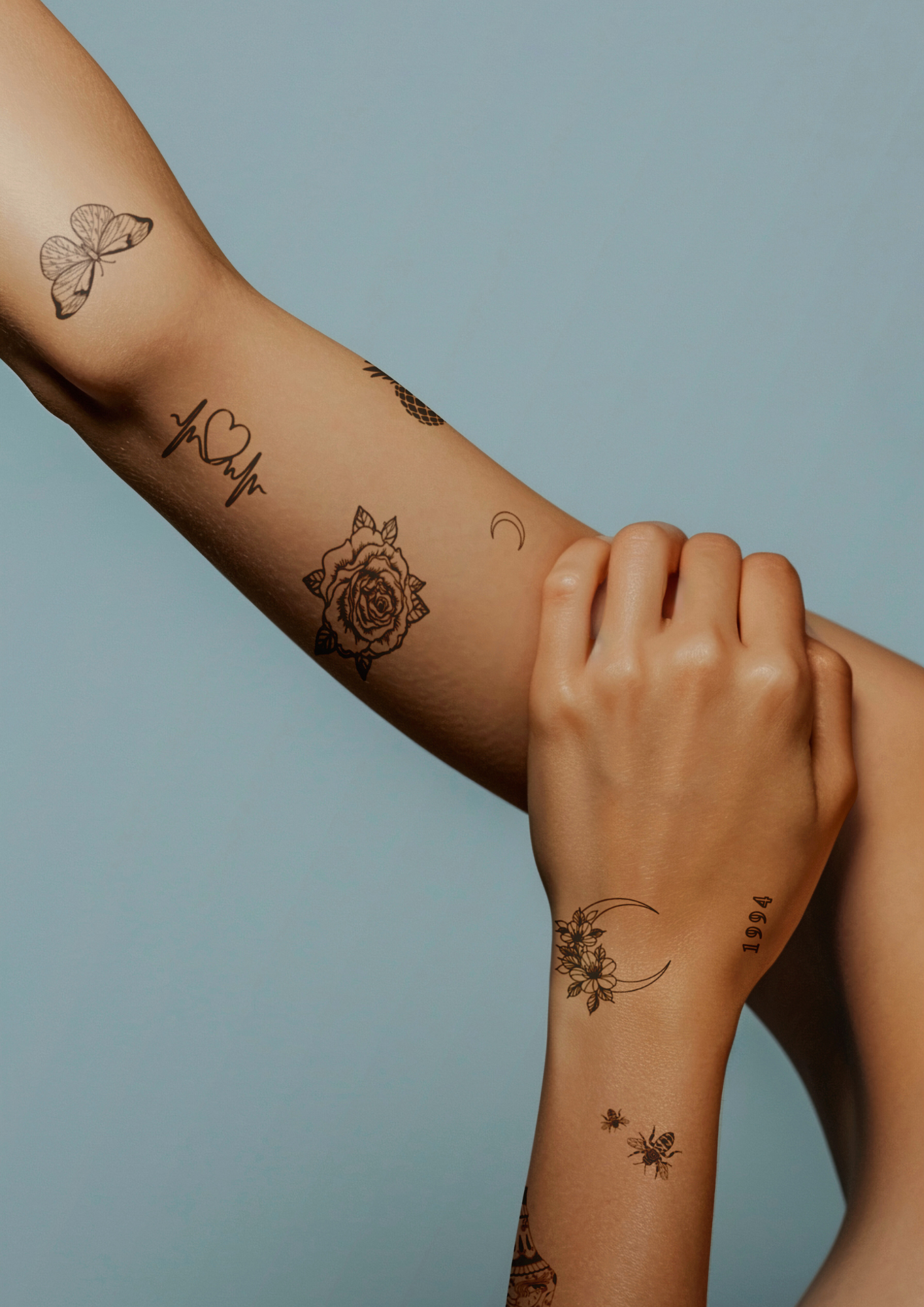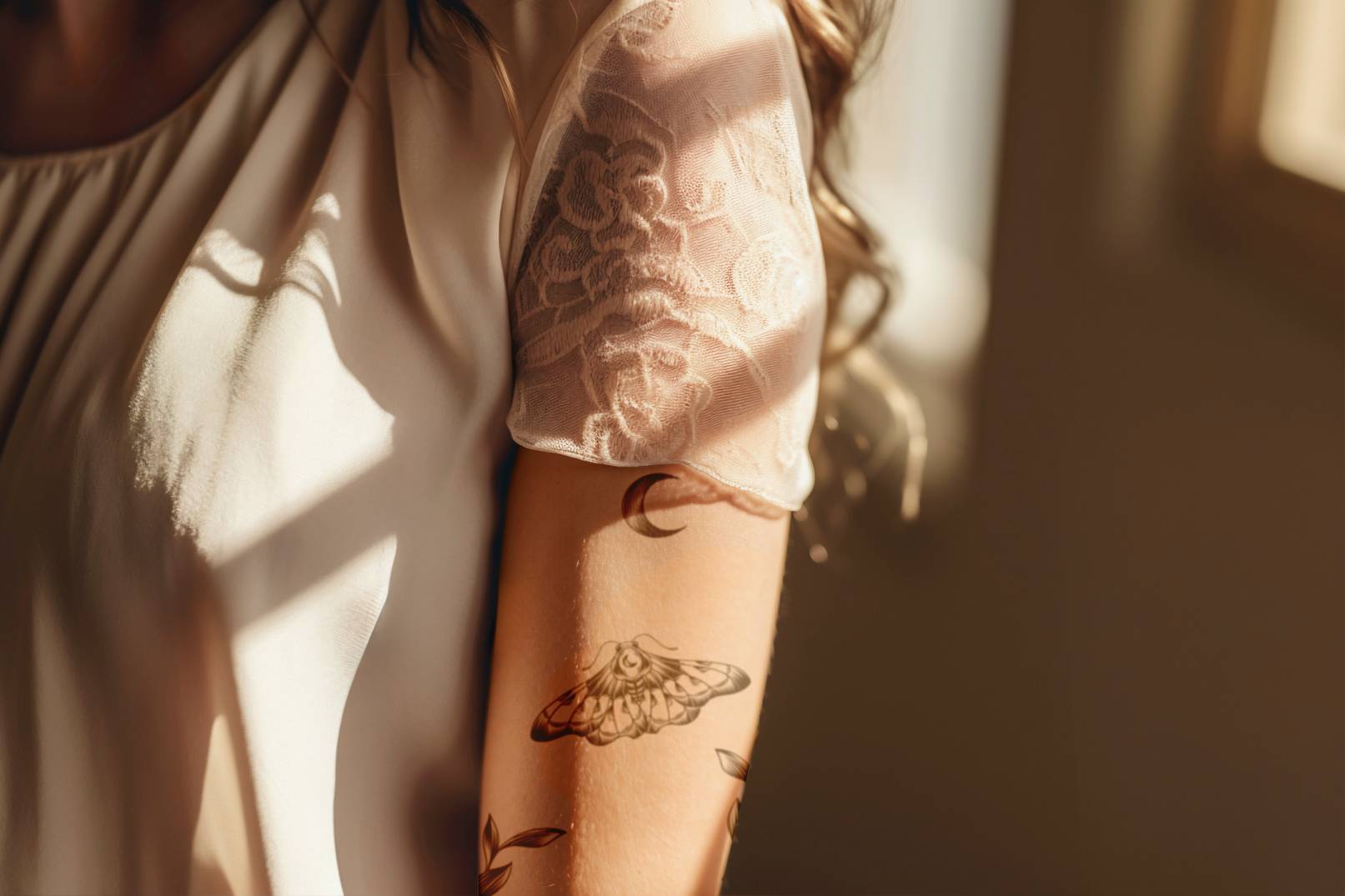


The sun and moon are the oldest couple in the sky, and the most tattooed duo in the celestial family. A sun and moon tattoo looks decorative until you ask what it's doing: it's carrying an argument: that two opposite things can be one thing. Day and night, strength and softness, what shows and what doesn't.
This guide reads the duo honestly: the duality at its core, the hidden meaning most guides skip, the gendered tradition and its modern reversal, the matching-halves design that made it the friendship tattoo of the decade — and the versions that aged badly, with the nuance that separates them from the classics.
The duality: two halves of one thing

The core meaning has survived every culture that looked up: the sun is the visible self (energy, will, the version of you that shows up) and the moon is the inner one: intuition, memory, the tides nobody sees. Worn together they don't choose; they claim both. That's why the duo is so often the tattoo of people who've stopped apologizing for being two things at once.
The celestial duo draws the argument in one frame: rays and crescent, sharing a center.
The hidden meaning: the eclipse
Here's the layer most guides skip. When sun and moon are drawn interlocked, the crescent cupping the sun or the two faces sharing one outline, the reference is the eclipse: the only moment the two actually meet. In symbolic terms it's union, not balance. Balance says "both, side by side"; the eclipse says "one, briefly, completely". People choose the interlocked version for relationships and reunions; the side-by-side version for the two halves of themselves. Same duo, different sentence — worth deciding before the needle, not after.
The gendered tradition, and its reversal
In most Western symbolism the sun ran masculine and the moon feminine — sol and luna, the king and queen of the alchemical sky. The tradition is real and worth knowing, mostly so you can decide what to do with it. Today the moon alone is one of the most tattooed feminine motifs there is (cycles, quiet power, renewal), while plenty of women wear the sun precisely because nobody assigned it to them. The modern duo often drops the gender entirely: two forces, no casting. All three readings are legitimate; the design doesn't check ID.
The matching halves
The design that made this duo the friendship tattoo of the decade: one person takes the sun, the other takes the moon. Couples, sisters, best friends — the pair reads as "we're opposite and we match", which is most good relationships summarized in two small tattoos. Practical notes from the pairs people actually get: matching size and placement (both wrists, both ankles) makes the pair legible; the two designs should share a line weight even if the motifs differ; and testing the pair in jagua for two weeks answers the question every duo should ask first — do we still love it when we're not standing next to each other?
If your halves are custom — her handwriting inside your crescent, coordinates under his sun — that's custom jagua territory: upload both designs, wear them through real life, then book the needle with evidence.
Meaning by style
The classical celestial face

The sun with a face isn't a 90s invention; it's centuries of celestial maps, alchemical prints and cathedral clocks. Done classically, with engraving-style line work like the celestial face duo, it reads timeless. Done in the soft boho style of 2015, it reads 2015. The motif isn't the problem; the drawing is.
Ethnic dotwork
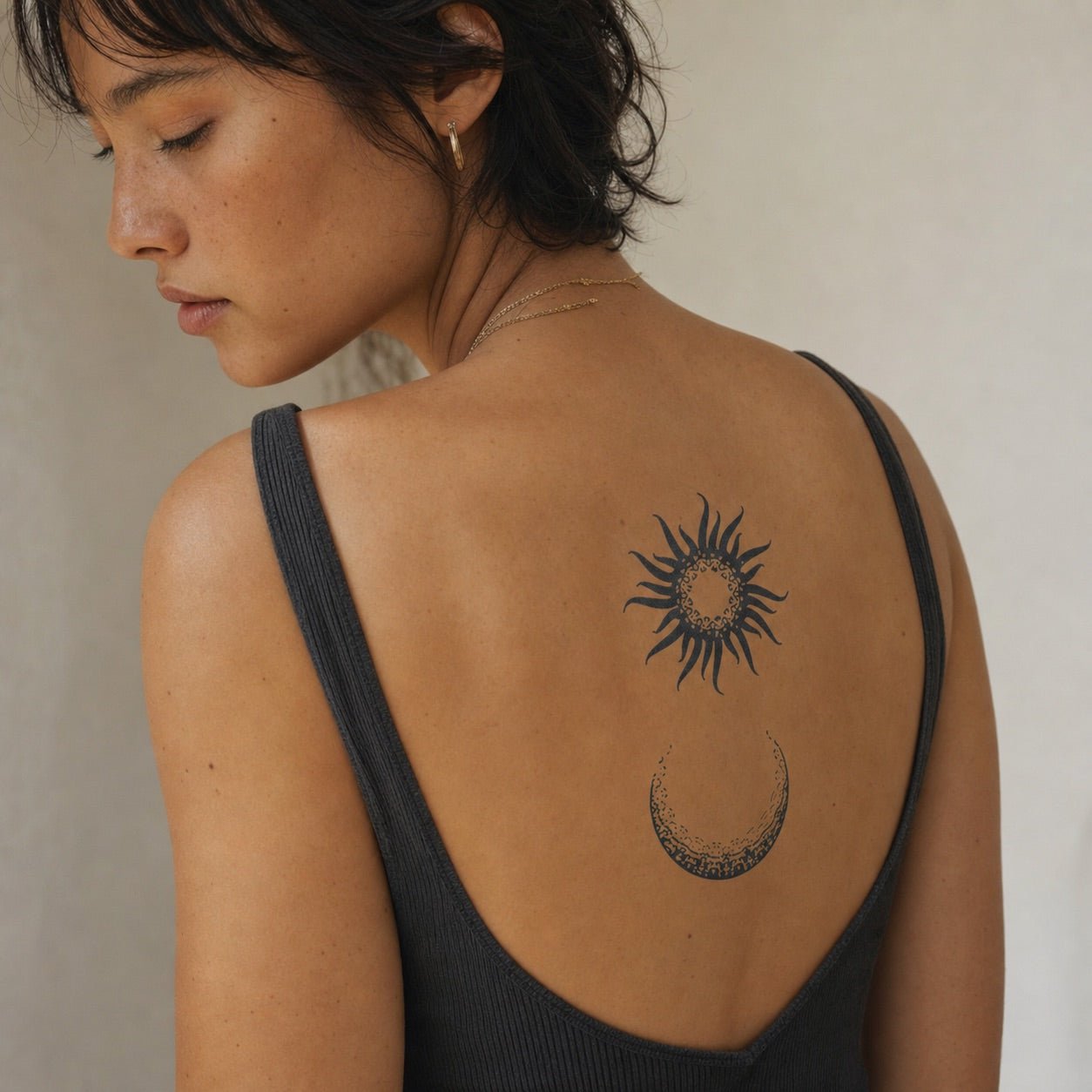
Stippled rays, patterned crescents, the sun as mandala. The dotwork sun and moon borrows from ethnic and ornamental traditions and ages beautifully: the density of points holds where thin color fails. Not to be confused with its barbed cousin from the 90s; more on that in the honest list.
The solar system column
The astronomy reading: the whole family, stacked. The solar system column runs planets down the spine or forearm — the sun and moon's meaning expanded to "I contain the whole sky". It's the format for people whose duality was never just two things.
Fine line and clouds
The whisper versions: a thin crescent behind the ear, a small sun at the ankle, or the duo drifting through clouds. Below 4 cm, simplicity wins; the celestial faces need at least 6 cm to keep their features.
Where to place a sun and moon tattoo
| Placement | Best versions | Recommended size |
|---|---|---|
| Both wrists / both ankles | The matching halves — one each | 2–5 cm each |
| Forearm | Celestial faces, dotwork | 6–14 cm |
| Spine | Solar system column, stacked duo | 10–30 cm |
| Back of the neck | Small interlocked duo | 3–6 cm |
| Shoulder blade | Larger faces, clouds version | 8–15 cm |
| Behind the ear | Micro crescent or sun | 1.5–3 cm |
Sun and moon tattoos that aged badly (the honest list, with nuance)
This family needs a careful list, because the difference between dated and classic is the drawing, not the motif:
The barbed tribal sun. The 90s armband refugee: black spikes radiating from an empty circle. Not to be confused with ethnic dotwork suns, which pattern the rays instead of weaponizing them — the difference between a symbol and a hazard sign.
The boho festival sun. The 2015 Pinterest special: wavy rays, dot chains, usually above the elbow, somewhere near a dreamcatcher. The classical engraved face says the same thing without the decade stamp.
The mismatched halves. Couple tattoos decided fast: her moon at 3 cm fine line, his sun at 6 cm bold: a pair that doesn't read as one. Match the size and the line weight, or don't match at all.
The overloaded duo. Sun, moon, stars, mandala, "la luna" in script: the whole sky in ten centimeters. The duo's power is that it's already complete at two.
Try your sky before it's forever
Two motifs, one argument, often two people involved: the sun and moon ask for more agreement than most tattoos. Our temporary sun and moon tattoos use natural jagua ink: it develops blue-black in the top layers of the skin, holds dotwork and engraving detail, lasts 1 to 2 weeks and fades on its own. Waterproof, painless, applied at home.
And if your halves are yours alone — a handwriting crescent, a birth-time sun — upload them as a custom jagua tattoo (minimum 3 pieces, exactly enough for both wrists and a spare decision).
Both halves, before the needle.
Celestial duos, dotwork suns and matching halves in natural jagua ink. Blue-black like fresh work, 1–2 weeks on skin.
Waterproof once developed · fades on its own · vegan
Sun and moon tattoo questions, answered
What does a sun and moon tattoo symbolize?
Two opposites claimed as one: the visible self and the inner one, energy and intuition, day and night. Worn together they say you've stopped choosing between your halves — which is why the duo became the signature tattoo of people who are two things at once.
What does the moon and sun symbol mean when interlocked?
The interlocked version references the eclipse — the only moment the two actually meet. It reads as union rather than balance: one, briefly, completely. People choose it for relationships and reunions; the side-by-side version speaks more about the halves within one person.
What do the sun and moon symbolize spiritually?
Across traditions: the sun stands for consciousness, vitality and the outer life; the moon for intuition, cycles and the inner one. The alchemical tradition crowned them king and queen of the sky — modern wearers often drop the casting and keep the two forces.
Is a sun and moon tattoo for couples?
It's the matching-halves classic: one takes the sun, the other the moon — couples, sisters, best friends. The pair works when size, placement and line weight match. And it's the single best case for a two-week jagua test: matching tattoos deserve matching certainty.
What sun tattoos should I avoid?
The barbed tribal sun of the 90s (spikes around an empty circle — not to be confused with patterned ethnic dotwork), the wavy boho festival sun of 2015, and any duo where the two halves don't match in size or line weight. The classical engraved face and the dotwork sun aged fine.
Can I test a sun and moon tattoo before getting it permanently?
Yes — and matching pairs are the strongest case in tattooing for it. Jagua develops blue-black in the skin, holds fine engraving detail, lasts 1–2 weeks and is waterproof. You both wear the exact halves at the exact spots, then decide together with evidence.