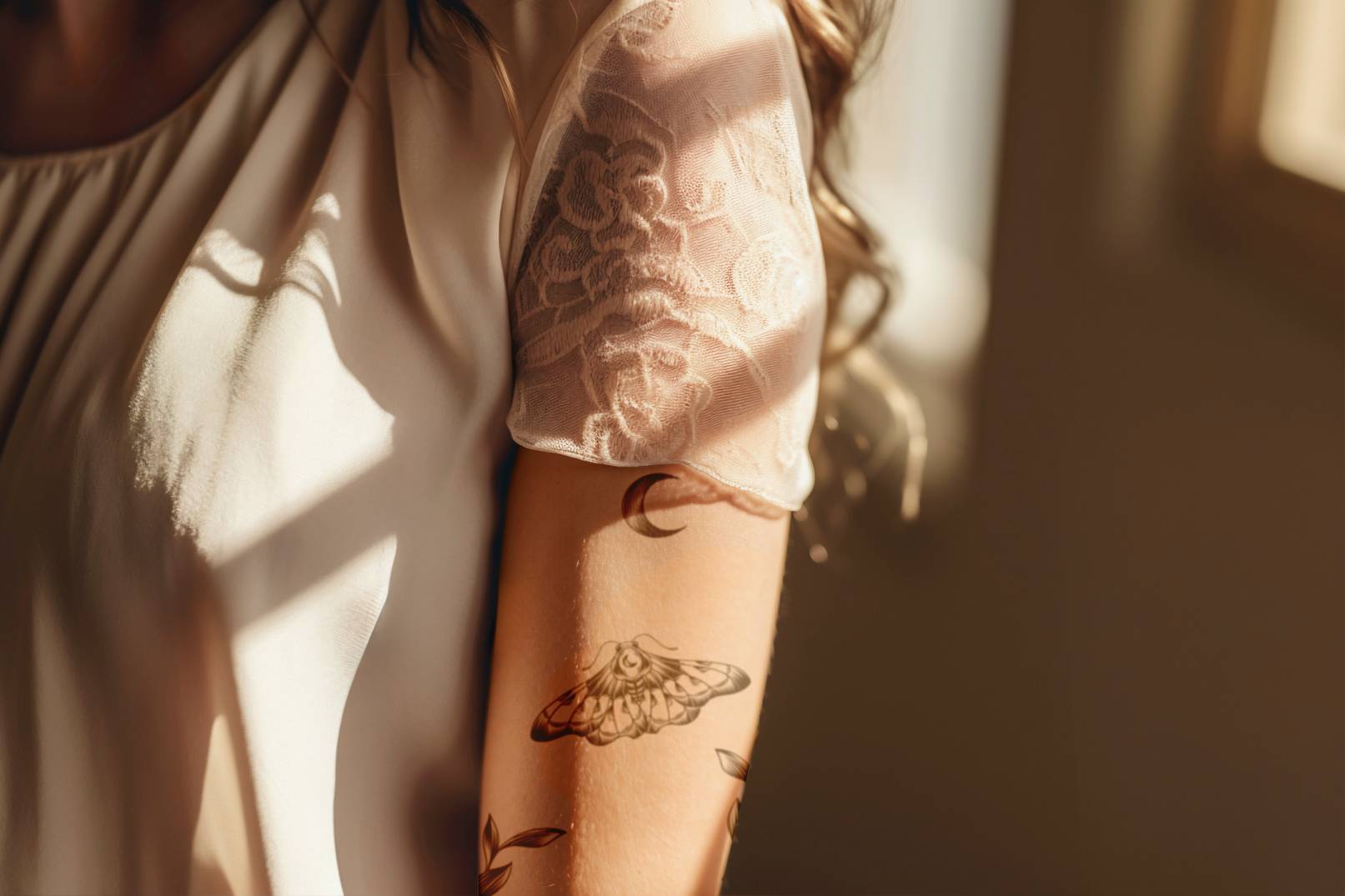


Two people apply the same tattoo the same day. One gets three days, the other gets twelve. The difference is almost never the product.
Most of it is decided in the twenty minutes before you apply, and in where you choose to put it. Here is what actually moves the needle, whatever type you are working with.
Before you apply: the prep everyone skips
This is the part that gets ignored, and it is the part with the biggest effect.
1. Wash with plain soap
Any residue on the skin, cream, oil, sunscreen, makeup, sits between the pigment and your skin. Wash the area with a mild soap and dry it properly. Nothing fancy, but do it.
2. Exfoliate the day before, never on the day
Dead cells shed fast and take the design with them, so removing them first helps. But exfoliating on the day strips the outer layer the pigment needs to grip, and leaves the skin reactive. The day before is the sweet spot.
3. If you shave, do it 12 to 24 hours ahead
A fresh shave leaves micro-abrasions and irritated skin. Same principle as exfoliating: useful, but not immediately before.
4. Nothing on the skin for six hours before
No cream, no oil, no self-tanner. Self-tanner is the worst of the three, because it sits in the same layer of skin you are trying to reach and it fades on its own schedule.

5. Choose the right area, the most underrated factor
Placement changes the result more than any product will. Two things decide it: how much the area rubs against clothing or itself, and how often it gets washed.
Fichier cible : body-zones-duration-EN_600x600.jpg Contenu de référence (ne pas réinventer le classement) : vert · 10-15 jours : avant-bras intérieur, cuisse, ventre, haut du dos, mollet orange · 7-10 jours : clavicule, épaule, décolleté, biceps, avant-bras extérieur, nuque rose · 3-7 jours : poignet intérieur, doigt, poignet, cheville, cou-de-pied

- 10 to 15 days: inner forearm, thigh, stomach, upper back, calf.
- 7 to 10 days: collarbone, shoulder, décolleté, bicep, outer forearm, nape.
- 3 to 7 days: inner wrist, fingers, wrist, ankle, top of the foot.
If you want the maximum, the inner forearm is the reliable choice. If you want it visible on your hand, that is a legitimate choice too, just budget for a shorter run rather than being disappointed by it.
6. What works by type
Not every technique responds to the same care, and that matters more than most guides admit.
Jagua (7 to 15 days). It stains the skin, so the goal is to slow down how fast your skin renews: hydrate daily, avoid abrasives, use SPF. Full routine in our jagua aftercare guide.
Water transfer (2 to 5 days). It sits on the surface, so the goal is the opposite: protect the film. A thin layer of talc or setting powder after application takes the shine off and reduces friction. Avoid oils entirely, they dissolve it.
Waterproof cosmetic ink (3 to 7 days). Somewhere between the two. Setting powder helps, and so does keeping it dry for the first hour.
Henna (1 to 2 weeks). A stain like jagua, so the same logic applies. It also tolerates a touch-up, which the others do not.
7. Products that work, and the myths to drop
What actually works
A fragrance-free moisturizer, daily, once the design has set. A thin barrier of balm or petroleum jelly before swimming or a long shower. SPF 30+ outdoors. That is genuinely the whole list.
Myths worth dropping
Hairspray. The classic. It does nothing useful and the alcohol dries the skin, which speeds up shedding.
Baby oil to "feed" it. Oil helps a stain look richer but dissolves a transfer film. Depends entirely on the type, and most advice online forgets to say which.
Liquid bandage or sealant sprays. They trap moisture and can irritate. For a stain they also block the oxygen it needs while developing.
Reapplying over a fading design. Works for henna. For a transfer it just looks doubled, and for jagua the new layer develops on a different timeline and comes out patchy.
8. Once it is on
The routine after application matters, but it is a smaller lever than the prep and the placement, and it depends on your type.
For jagua, the first 48 hours decide the depth of the color and there is a specific sequence to follow: our aftercare guide covers it hour by hour. For transfers, it is simpler: keep it dry for an hour, then avoid oils and friction.

9. The mistakes that kill it in three days
- Applying it on moisturized skin. The single most common cause of a design that never took properly.
- Choosing a hand or a wrist and expecting two weeks. Not a product failure, a placement choice.
- Exfoliating during, not before. Scrubs, mitts and body brushes remove exactly the layer holding your design.
- Long hot baths. Heat and prolonged soaking soften the outer layer of skin. Showers are fine, baths are not.
- Tight straps over it. Watch bands, bag straps and waistbands wear a design down in a day or two of friction.

Two weeks, not three days.
If your tattoos keep giving up in the first shower, the problem is the type, not your routine. Jagua stains the skin instead of sitting on it: 7 to 15 days, waterproof once developed. Also available as gel for freehand.
Free shipping over $75 · Dermatologist tested, vegan, PPD-free
Frequently asked questions
Can I swim with a temporary tattoo?
Yes, but it shortens the wear. Chlorine and salt water both speed up fading, and long soaking softens the outer layer of skin. Smooth a thin barrier of balm over the design first and rinse with fresh water afterwards.
Does petroleum jelly make a temporary tattoo last longer?
As a barrier before water, yes. As a daily product, it depends on the type: it helps a stain like jagua or henna, but it dissolves a water-transfer film. Check what you are wearing before you slather it on.
Should I moisturize a temporary tattoo?
Once it has set, yes. Hydrated skin sheds more slowly, and slower shedding means a longer-lasting design. Use a fragrance-free lotion and avoid anything exfoliating.
Does hairspray make a temporary tattoo last longer?
No. It is the most repeated trick online and it does not work. The alcohol dries out the skin, which makes it shed faster, so you lose days rather than gaining them.
Where does a temporary tattoo last longest?
Inner forearm, thigh, stomach, upper back and calf, at 10 to 15 days. Collarbone, shoulder and outer forearm sit around 7 to 10. Wrists, fingers, ankles and the top of the foot are the shortest, at 3 to 7 days.
Can I reapply over a fading tattoo?
For henna, yes. For a water transfer it looks doubled and uneven. For jagua the new layer develops on its own timeline and comes out patchy, so it is better to remove what is left and start clean.
Which type of temporary tattoo lasts the longest?
Jagua, at 7 to 15 days, because it stains the skin rather than sitting on it. Full comparison by type in our duration guide.