

You've probably seen both jagua and henna pop up when searching for temporary body art — and at first glance, they sound pretty similar. Both are plant-based. Both stain your skin. Both fade on their own. So what's the real difference, and which one is right for what you're going for?
Jagua vs henna: the side-by-side
| Jagua | Henna | |
|---|---|---|
| Source | Genipa americana fruit (Central & South America) | Lawsonia inermis leaves (North Africa, Middle East, South Asia) |
| Stain color | Blue-black — looks like real tattoo ink | Reddish-brown / warm maroon |
| How long it lasts | 7–14 days | 5–14 days |
| Time to full color | 24–48 hours after removal | 24–48 hours (starts bright orange, darkens to brown) |
| Wear time before rinsing | 1–3 hours | 4–6 hours for full stain |
| Texture | Smooth gel (thin, easy to work with) | Thicker paste (similar to toothpaste) |
| Best for | Realistic tattoo look, fine lines, shading | Traditional mehndi patterns, cultural events |
| Color from a fruit? | Yes (jagua fruit) | Yes — when it's pure henna (watch out for additives) |
That table covers the basics. But the differences run deeper than a quick checklist — especially when it comes to color, what styles each one can pull off, and the safety issue most people don't hear about until it's too late.
Color: this is the big one
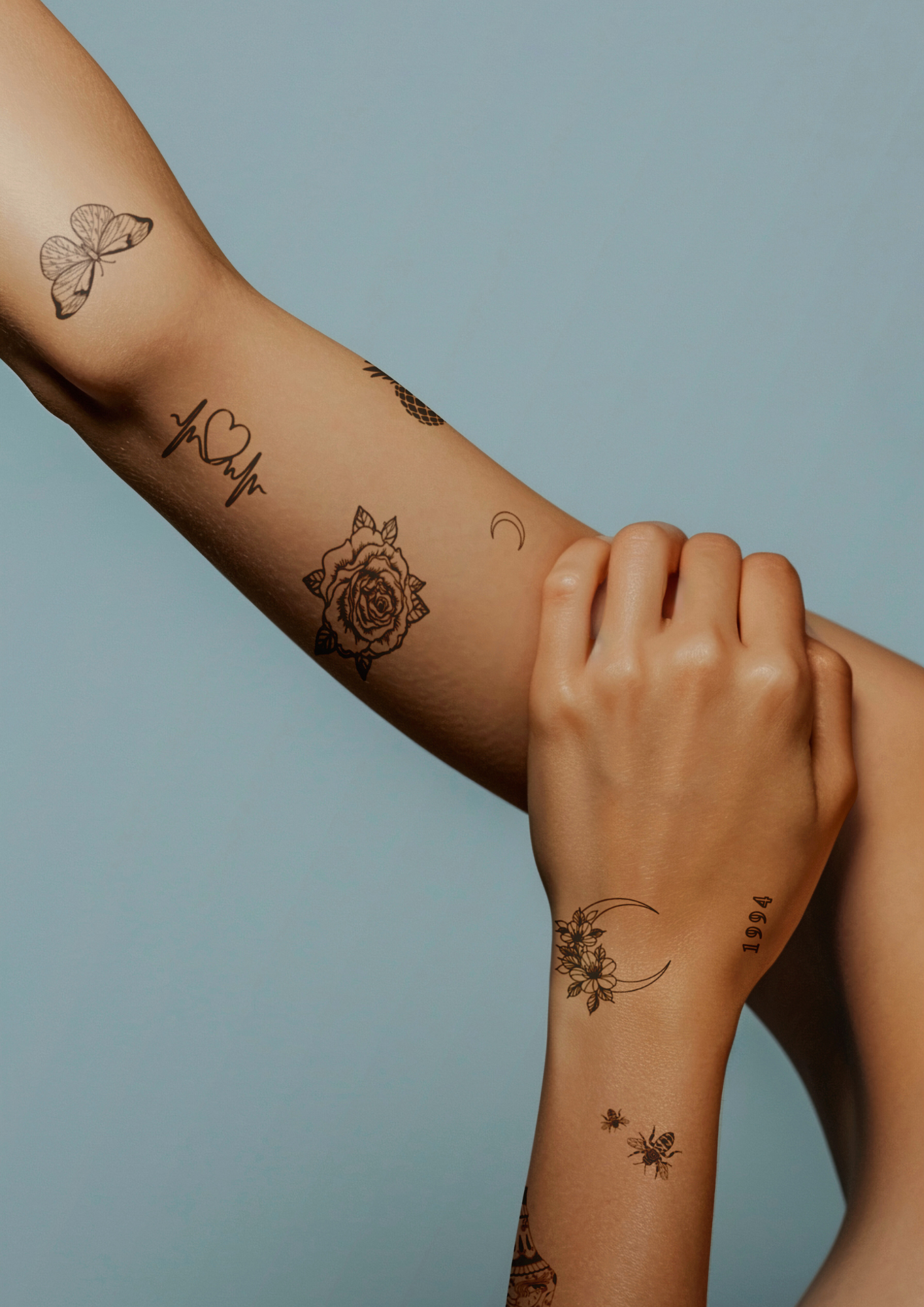
Jagua stains blue-black. Think real tattoo ink. When someone sees a jagua design on your skin, their first instinct is usually "when did you get that tattoo?" — because the color genuinely mimics permanent ink. The blue-black tone develops gradually over 24 to 48 hours after you rinse off the gel, and on areas like your forearm, shoulder, or upper back, it looks convincingly real.
That makes jagua the obvious pick if you want to test a design before going permanent, wear something striking for a festival or vacation, or just see how a specific placement looks on your body before you commit. The color does the heavy lifting.
Henna stains reddish-brown. It starts bright orange when the paste is first removed, then warms into a maroon or chocolate-brown over a couple of days. The exact shade depends on your skin tone and where it's placed, but it's always in the warm/brown family. Never black, never blue.
That's not a downside — it's a different purpose. Henna's warm tone is beautiful for traditional mehndi designs at weddings, Eid and Diwali celebrations, and cultural events where the reddish-brown color is part of the tradition. But if you're going for the "is that a real tattoo?" effect, henna won't get you there.
Want to see that blue-black jagua color on actual designs? Browse our full collection — every piece uses natural jagua ink.
A quick word about "black henna" (this matters)
If you've ever been offered a "henna tattoo" at a boardwalk, beach, or street fair that came out black instead of reddish-brown — that probably wasn't henna. Real henna never stains black.
Products marketed as "black henna" typically contain PPD (para-phenylenediamine), a chemical used in hair dye that's not approved by the FDA for direct skin contact [1]. PPD can cause blistering, chemical burns, permanent scarring, and lifelong sensitivity to hair dye products. The Cleveland Clinic calls it out directly: it's the additives used to darken henna that create the danger, not henna itself [2]. The American Academy of Dermatology also issued a position statement warning against black henna tattoos containing PPD [3].
Jagua is not black henna. Jagua gets its dark color naturally, from the juice of an edible fruit — no PPD, no synthetic dyes, no hair dye chemicals. If you want a dark temporary tattoo without PPD, jagua is the answer.
This is a topic that deserves more than a few paragraphs, so we wrote a full breakdown: The dangers of "black henna" and why jagua is a safer alternative.
How long each one lasts
Both fade naturally as your skin exfoliates — no removal needed. But jagua tends to hold a bit longer:
- Jagua: 7 to 14 days on most body areas. Forearms, shoulders, and upper back tend to hold longest.
- Henna: 5 to 14 days. Henna's strongest on hands and feet, which works out well since that's where most mehndi designs go.
Longevity depends on placement, how often the area gets wet, and your skin's natural turnover rate. If you want the full picture — including a placement guide and tips for maximizing wear time — we've got a dedicated article: How long do temporary tattoos actually last?
Texture and what it means for your design
This is the part most comparison articles skip, but it actually makes a big difference in what kind of art each one can produce.
Jagua gel is smooth and fluid — close to the consistency of hair gel. That means it flows through fine-tipped applicators easily, which makes thin lines, small details, and even shading possible. If you want something that looks like a professional tattoo artist drew it — clean geometry, delicate lettering, realistic dotwork — jagua handles that.
That's why all of our designs are made with jagua. A minimalist tattoo with thin, precise lines or a detailed mandala needs that level of control — and henna paste just can't deliver it at the same resolution.
Henna paste is thicker, closer to a dense toothpaste. It's applied through rolled cones and is best suited for bold, flowing lines — paisleys, vine patterns, intricate floral fills, and the layered borders that define classic mehndi. It's gorgeous work, but the medium favors broad strokes over needle-fine detail.
Think of it this way: jagua is a fine-tip pen, henna is a calligraphy brush. Both create beautiful things — just different kinds of beautiful.
Cultural roots
Both traditions go back centuries, and both deserve to be understood — not just used.
Henna has been part of daily life across North Africa, the Middle East, and South Asia for thousands of years. It's a central element of wedding celebrations (mehndi on the bride's hands and feet is a deeply meaningful tradition), religious holidays, and milestone events. In the US, you'll see henna most often at South Asian weddings and cultural festivals. The art form is rich, layered, and carries real spiritual and social meaning in the communities that practice it.
Jagua comes from the indigenous peoples of Central and South America — communities in Brazil, Panama, Colombia, and the Amazon basin who have used the Genipa americana fruit for body decoration, ceremonial markings, and traditional medicine for generations. The practice is less widely known in mainstream US culture, but it's no less significant. If you're curious about the full story, our guide to jagua covers its origins, how it works, and what makes it unique.
Which one should you choose?
Go with jagua if you want:
- A temporary tattoo that genuinely looks like real ink (blue-black color)
- Fine lines, small details, or shading in the design
- To test a tattoo idea before making it permanent
- A design on your arm, shoulder, back, chest, or legs — not just hands and feet
- A dark stain whose color comes from a fruit, with no PPD
Go with henna if you want:
- The warm reddish-brown color that's part of mehndi tradition
- Bold, flowing patterns on your hands and feet
- To celebrate a cultural moment where henna is traditional
- The specific aesthetic of mehndi art (paisleys, vines, florals)
Skip "black henna" entirely. If someone at a beach, boardwalk, or street fair is offering a temporary tattoo that stains black and they're calling it henna — ask what's in it. If they can't give you a clear answer, walk away. Safer, natural alternatives exist.
If you're going jagua, start with the semi permanent tattoos guide — and once it's on, the aftercare routine is what gets you the full two weeks.
And if you're also weighing permanent ink as an option, we've got you covered there too: Jagua vs permanent tattoo: which one is right for you? — or for the full three-way breakdown with scientific sources, check out Jagua, henna, or permanent tattoo? The complete comparison.
Ready to try jagua?
If the realistic, tattoo-like look is what you're after, you're in the right spot. Every design in our shop uses natural jagua ink — blue-black color, waterproof once developed, fades on its own in 1 to 2 weeks. No PPD, no synthetic anything.
A few starting points depending on what catches your eye:
- Bestsellers — the designs people keep coming back for
- Small tattoos — great for a first try
- Flower tattoos — roses, cherry blossoms, wildflowers
- Butterfly tattoos — consistently our most popular category
- Zodiac tattoos — your sign, in jagua ink
- Couple tattoos — matching designs for you and your person
- Arm tattoos — the placement most people start with
Frequently asked questions
Is jagua the same as black henna?
Not at all — and this confusion can actually be dangerous. Jagua is a natural fruit-based ink that produces a blue-black stain. "Black henna" is regular henna mixed with PPD, a hair dye chemical the FDA says shouldn't be applied directly to skin [1]. PPD can cause blistering, scarring, and permanent sensitivity. Jagua achieves a similar dark color naturally, with zero synthetic chemicals. For the full safety breakdown, read our guide to black henna dangers.
Which lasts longer — jagua or henna?
Jagua typically lasts 7 to 14 days; henna 5 to 14 days. In practice, jagua holds noticeably longer on areas like the forearm and shoulder. On hands and feet, they're closer to equal. Check out our full duration guide for a body-area breakdown.
Can I be allergic to jagua?
It's possible but uncommon. Jagua comes from an edible fruit, and a small number of people may have a mild reaction — usually localized redness that clears up in a few days. That's a completely different situation from the severe chemical burns PPD causes. We always recommend a patch test 48 hours before applying a larger design. Our full safety guide walks you through how to test and what to watch for.
Does jagua show up on dark skin?
Yes. Jagua stains the top layers of skin regardless of your tone. On deeper skin, the blue-black color may be subtler than on lighter skin, but it's still visible — especially in direct light. Many people with darker skin tones actually prefer jagua over henna because the blue-black shows up better than reddish-brown. We cover this in detail in Jagua tattoos on different skin tones.
Can I mix jagua and henna together?
Yes — some body art professionals blend henna paste with jagua juice to create what's sometimes called "hengua." The result is a deep eggplant or near-black tone, darker than pure henna but slightly warmer than straight jagua. It's popular with mehndi artists who want extra-dark bridal designs without using any chemicals.
I'm also thinking about a permanent tattoo. Which article should I read?
If you're deciding between temporary and permanent, start with Jagua vs permanent tattoo. For a deeper dive comparing all three options with scientific references, check out Jagua, henna, or permanent tattoo? The complete scientific comparison.