Dragon Tattoo
Filter
Sort by:
Dragons that actually look like real ink
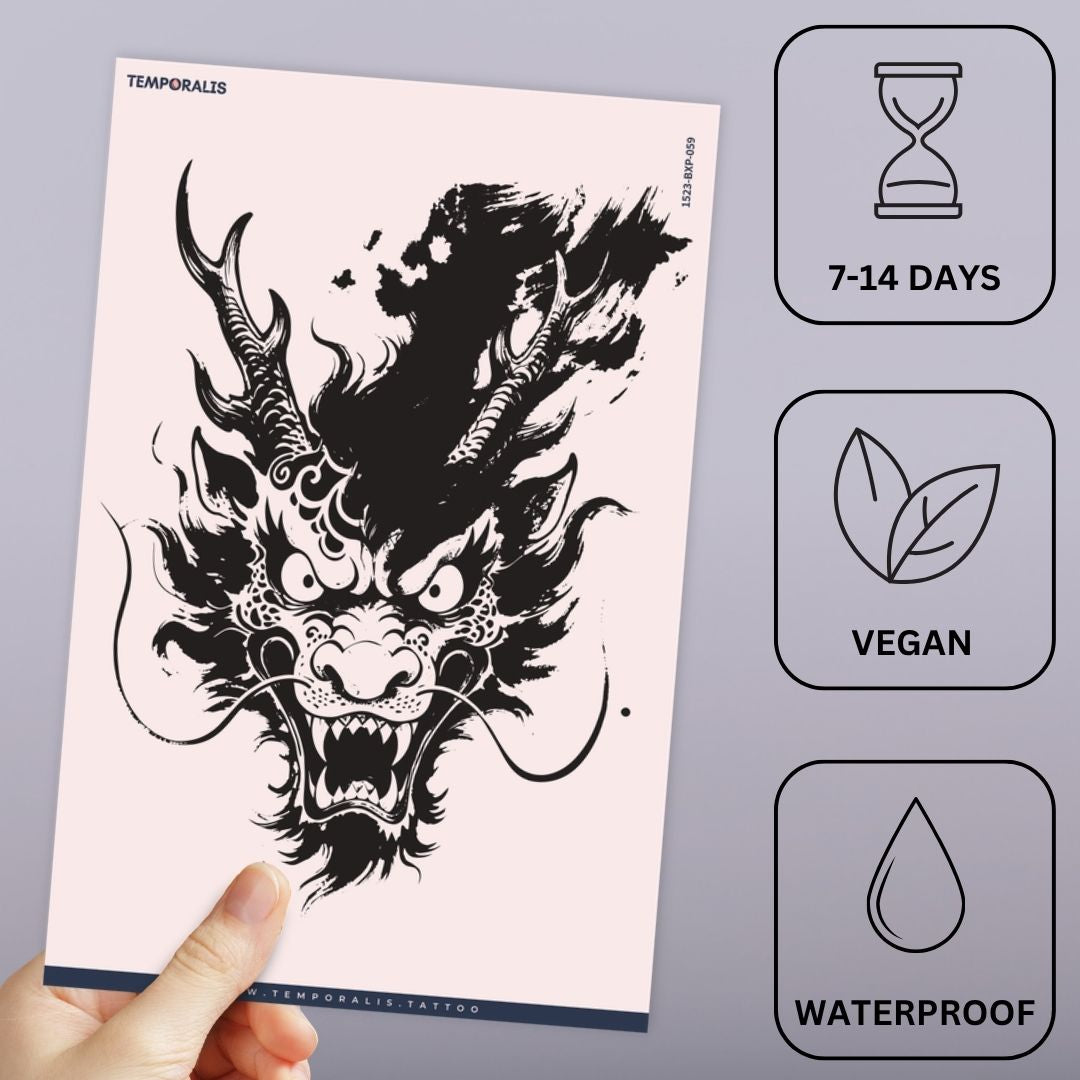
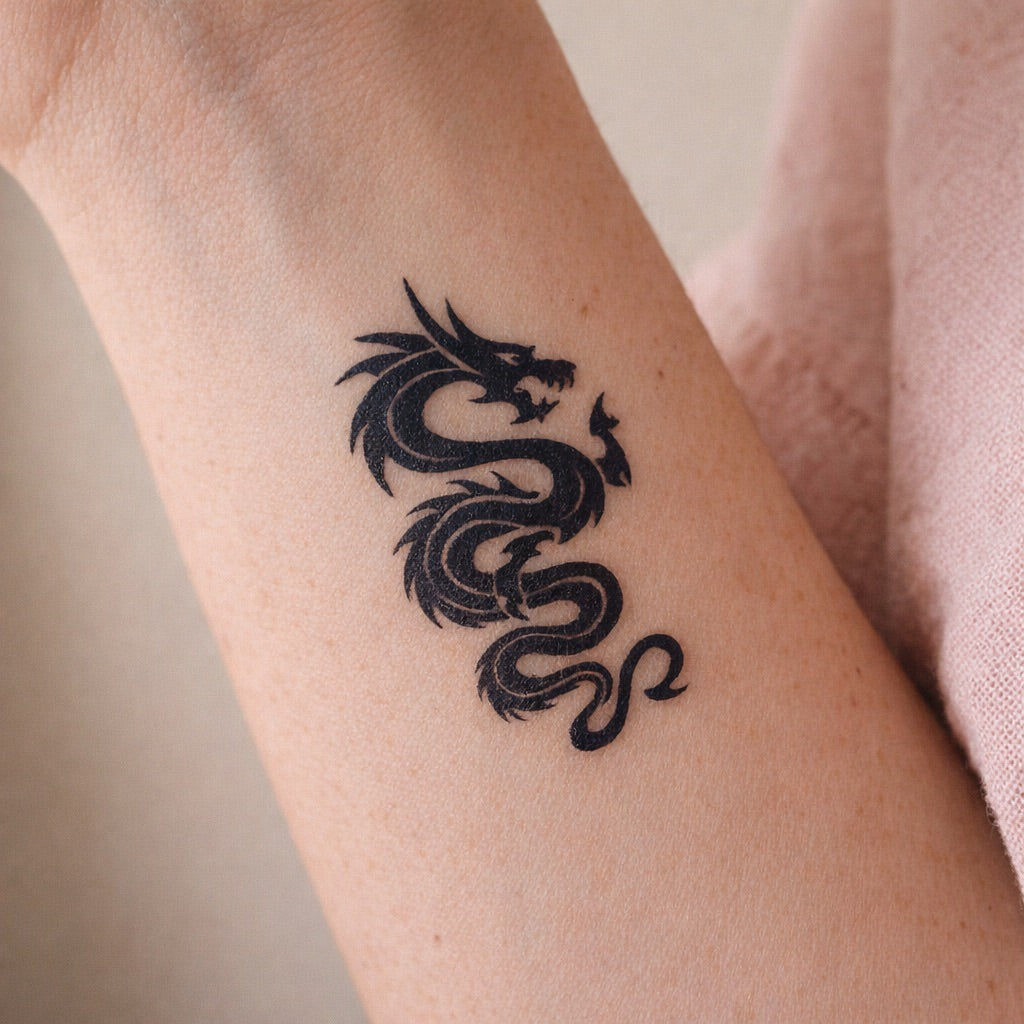
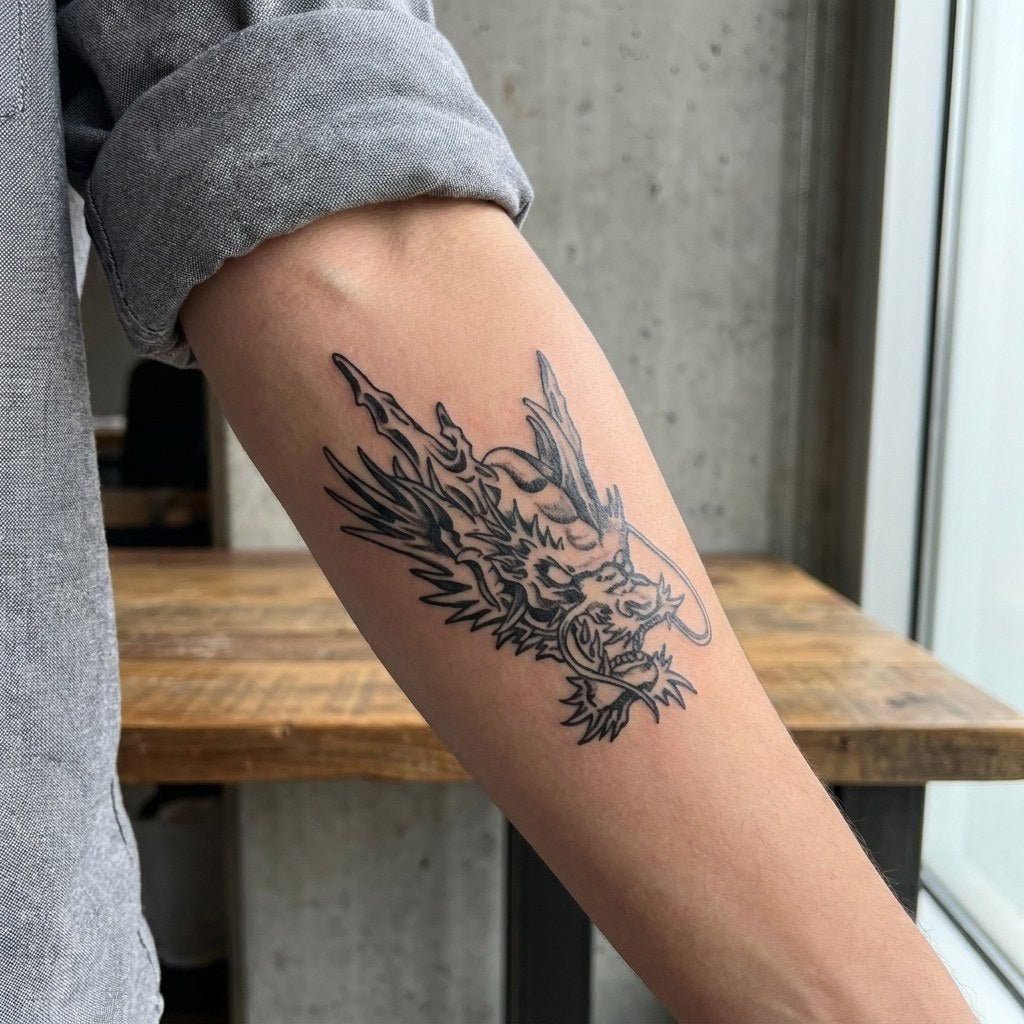
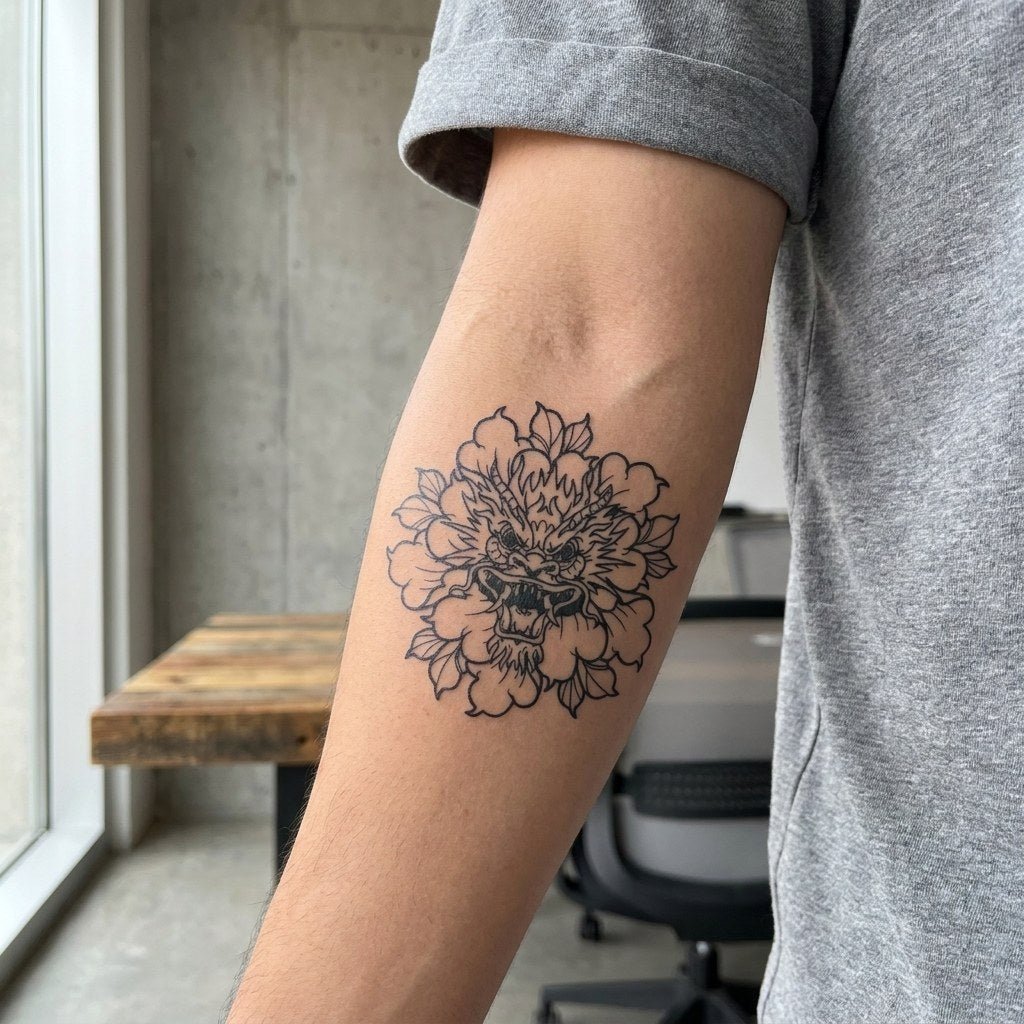
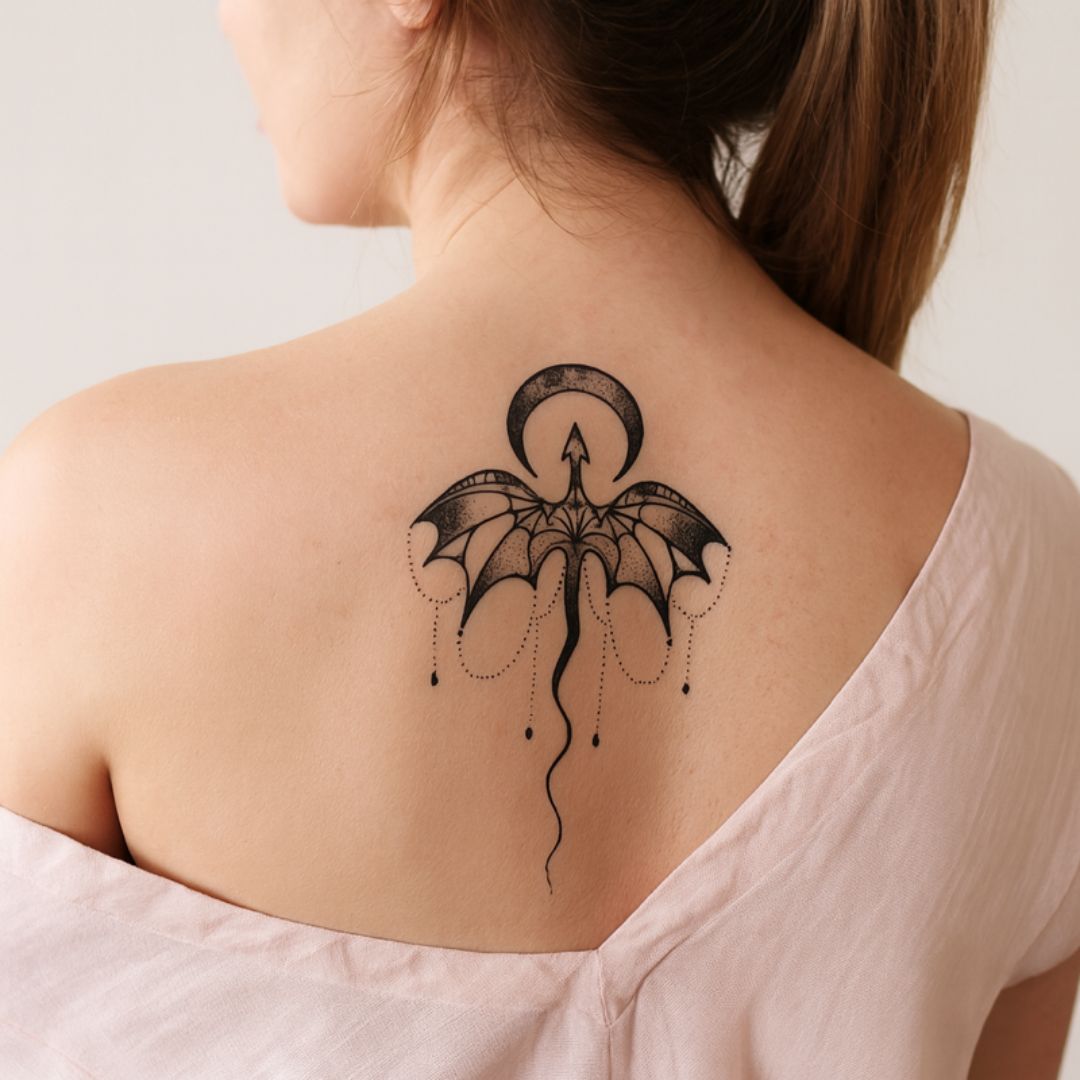
Dragon tattoos only work when they're done right — the line weight, the flow, the scale detail. Get it wrong and it looks like a fantasy novel cover. Get it right and it reads like proper studio work. That's where jagua comes in. These aren't kids' party stickers. Natural jagua stains your skin a deep blue-black, develops over 24 hours, lasts 1 to 2 weeks. Vegan, waterproof, no needle. Test a placement, try a style, wear the design for two weeks, switch it up.
The styles people are picking
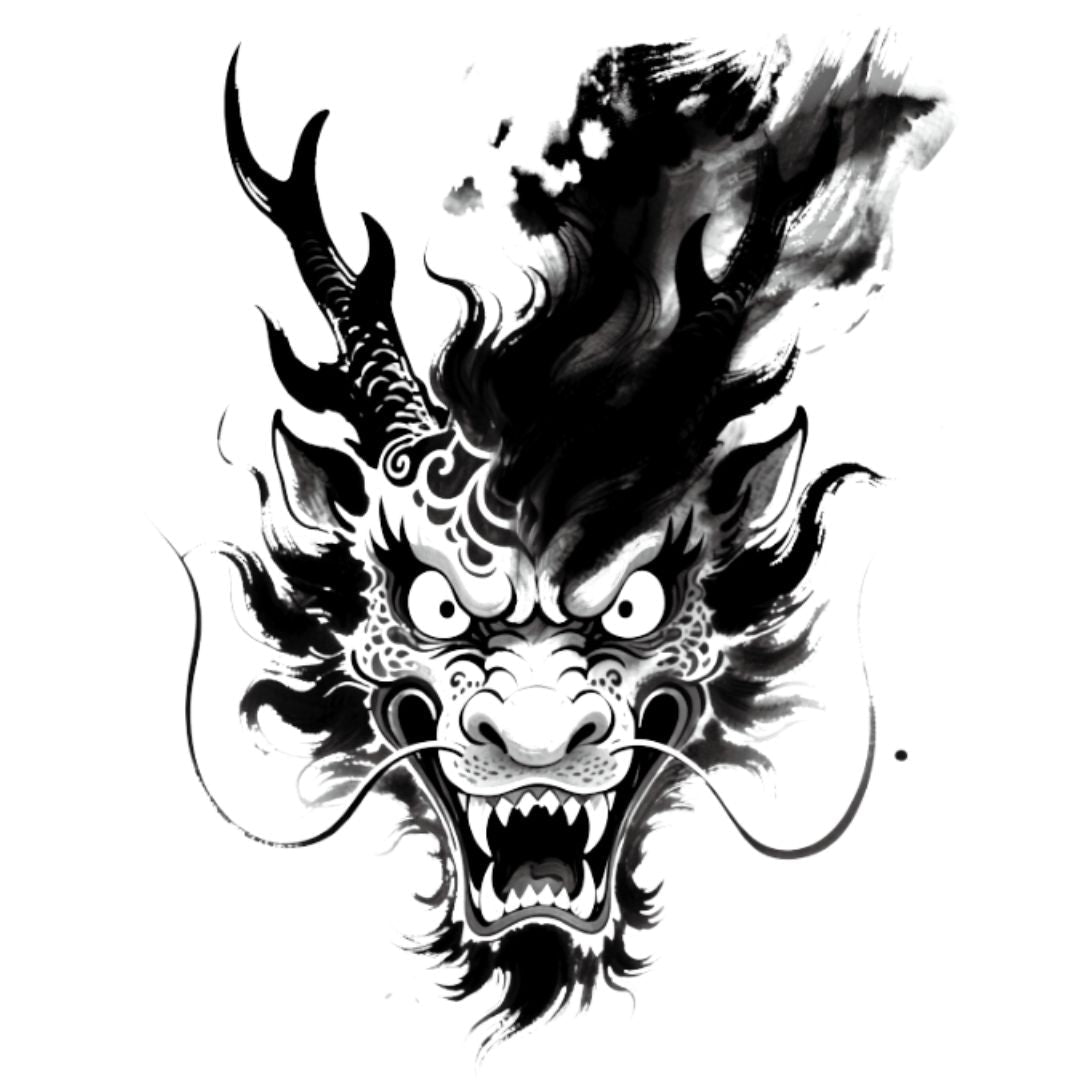
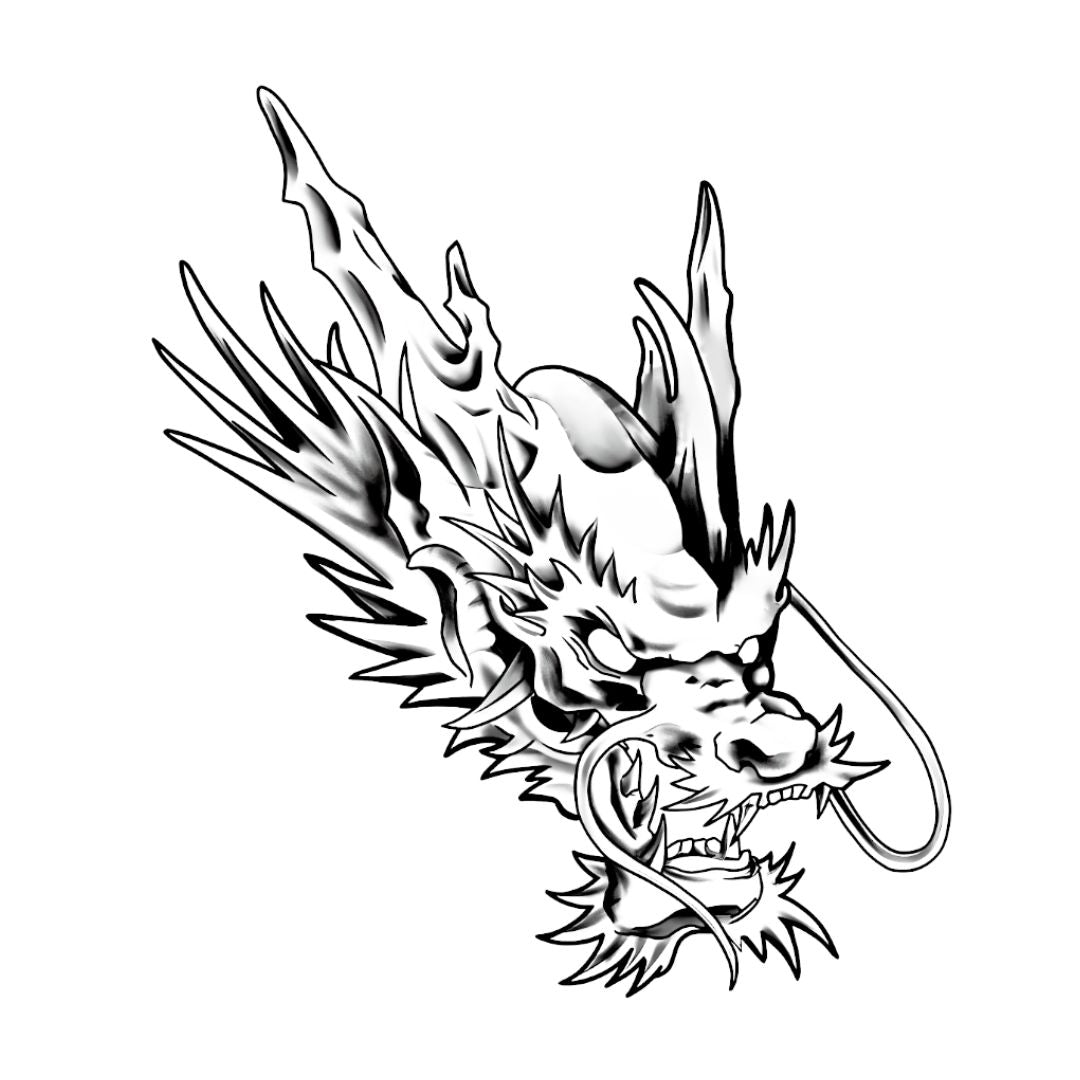
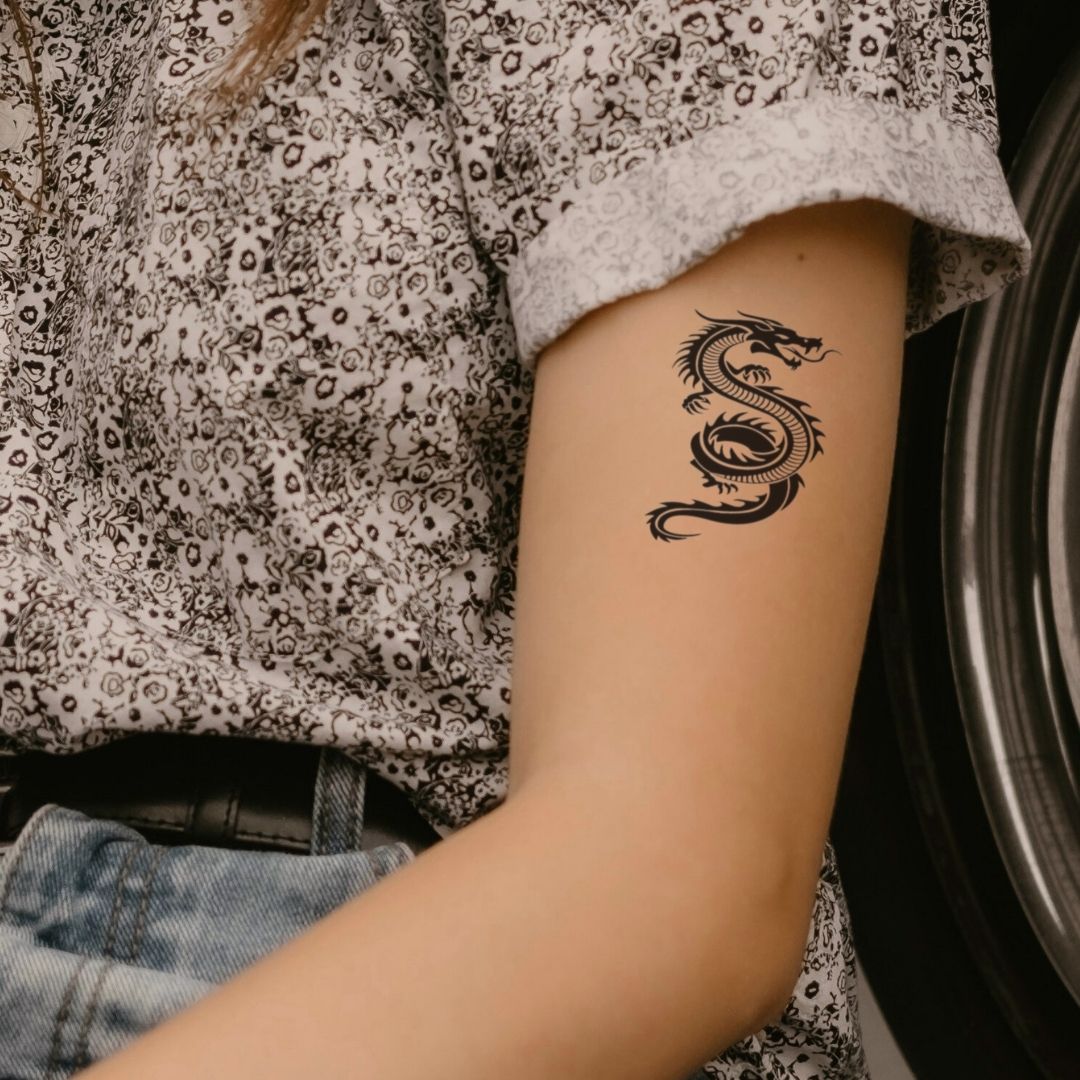
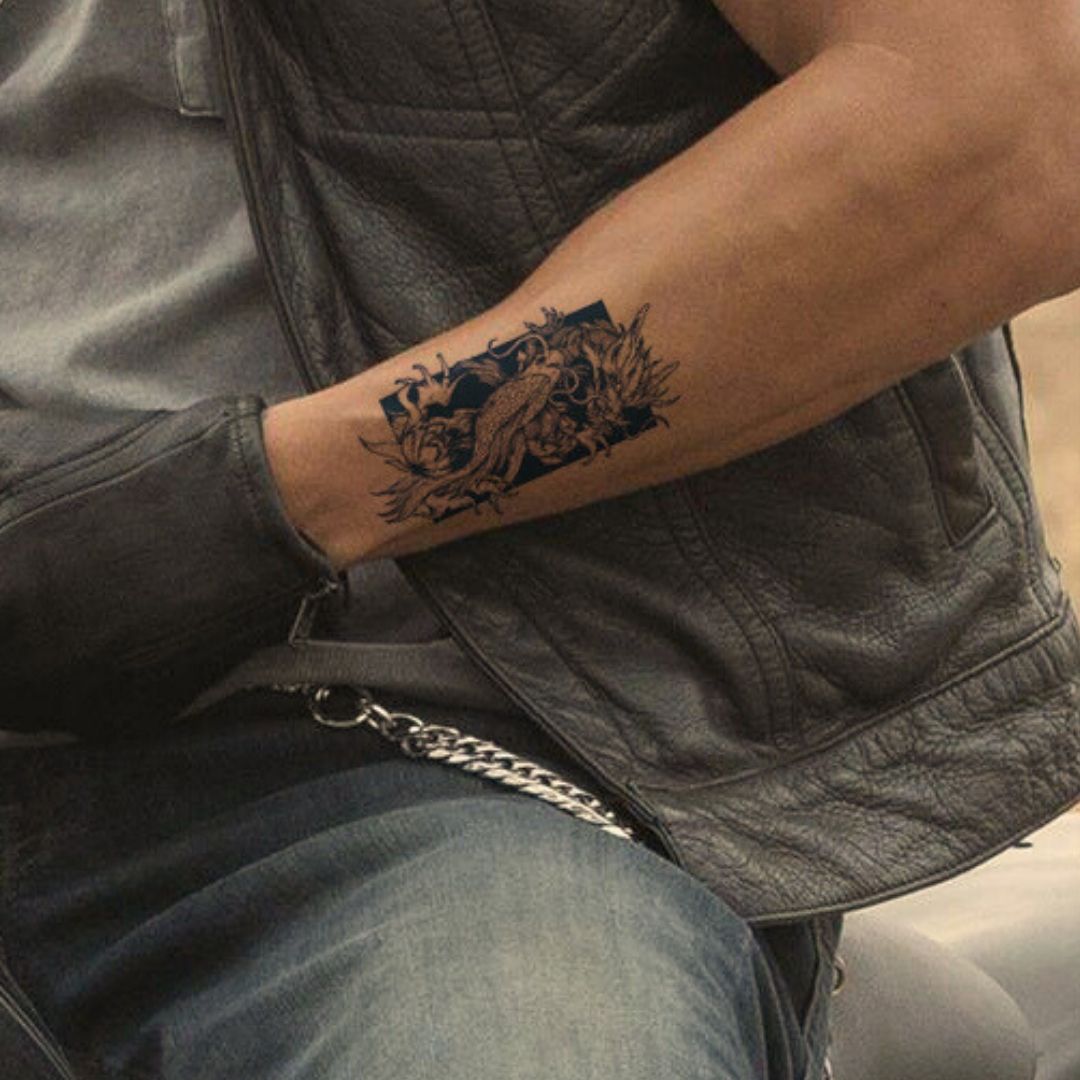
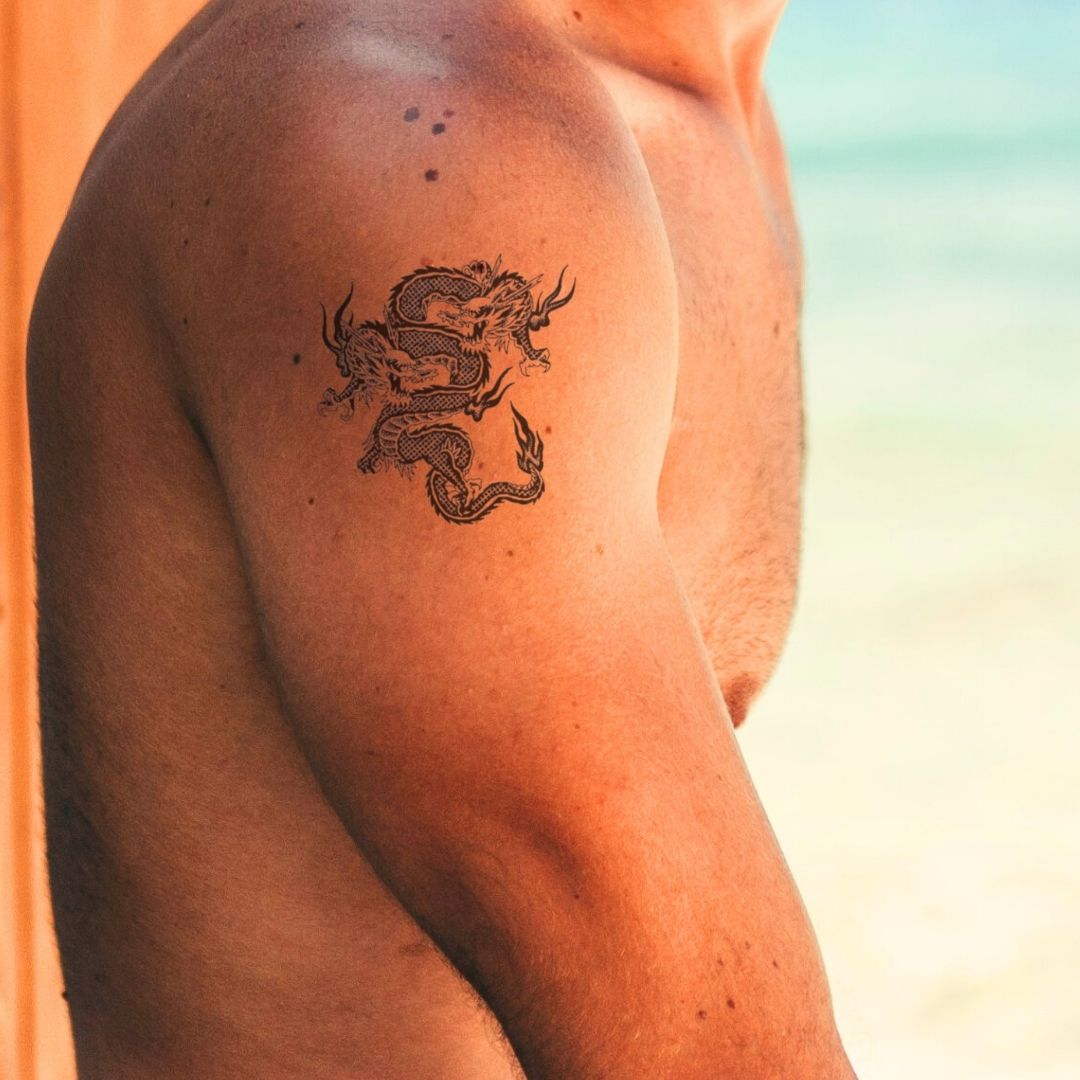
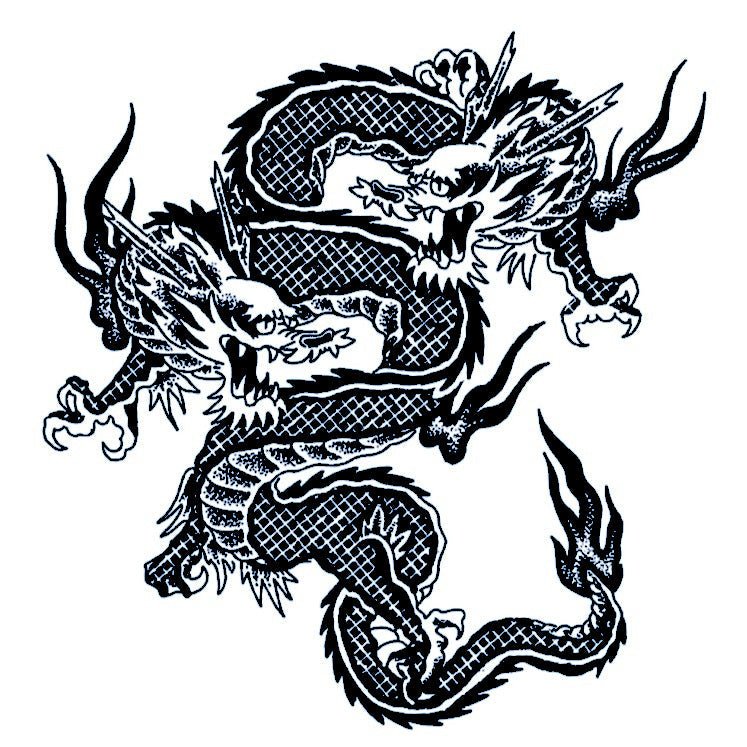
Japanese (Ryujin) — Long serpentine body, three claws, flowing whiskers, no wings. Works beautifully on the forearm, calf, or as a back piece. Blue-black jagua matches traditional irezumi better than cheap pure-black decals.
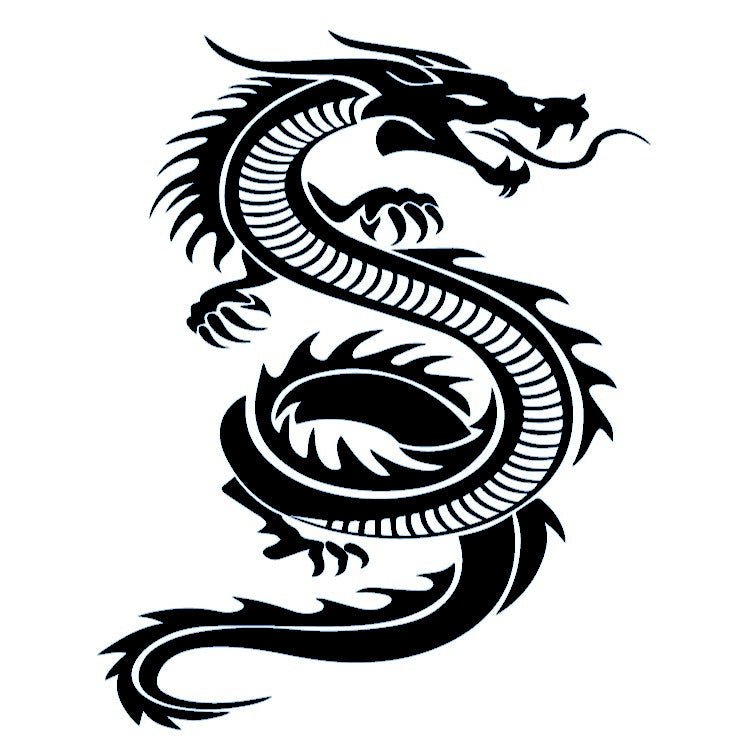
Chinese imperial — Longer body, four or five claws (five was historically reserved for emperors), often shown holding the pearl of wisdom. The elongated shape suits forearms and shoulder pieces.
Celtic knotwork — Interlocking lines, no shading, based on medieval Welsh, Scottish, and Irish manuscripts. Great if you have any Celtic heritage and want a dragon that's actually your tradition.
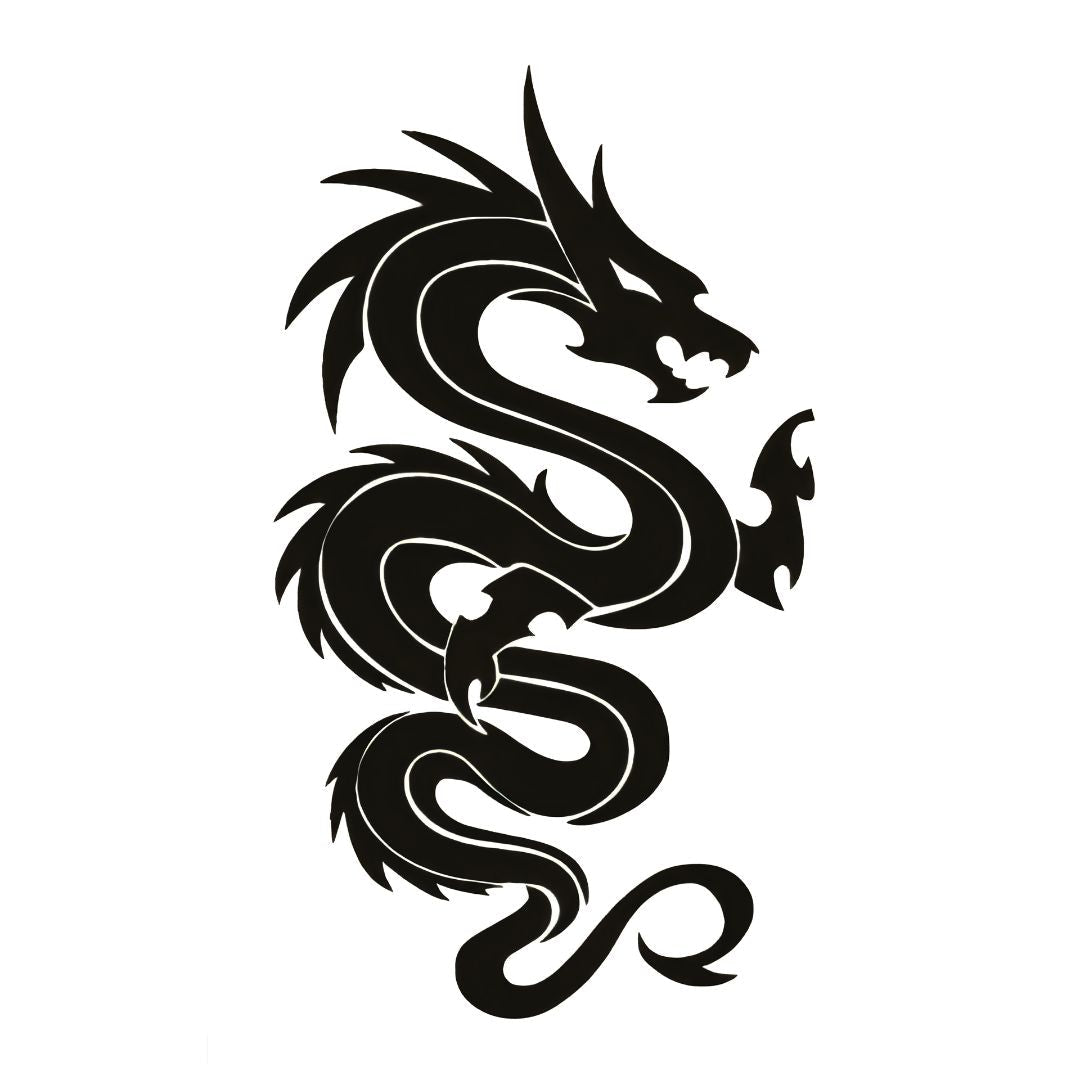
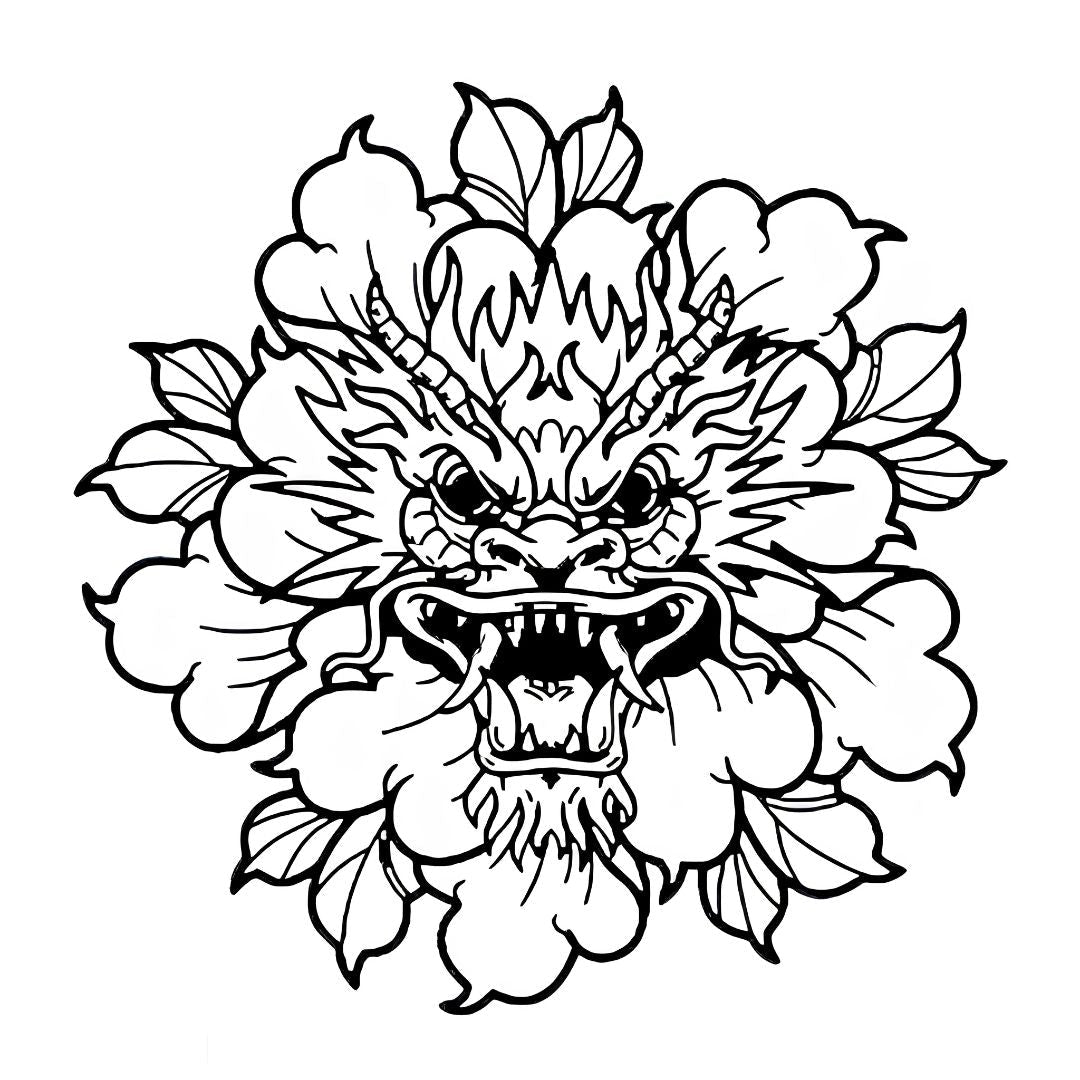
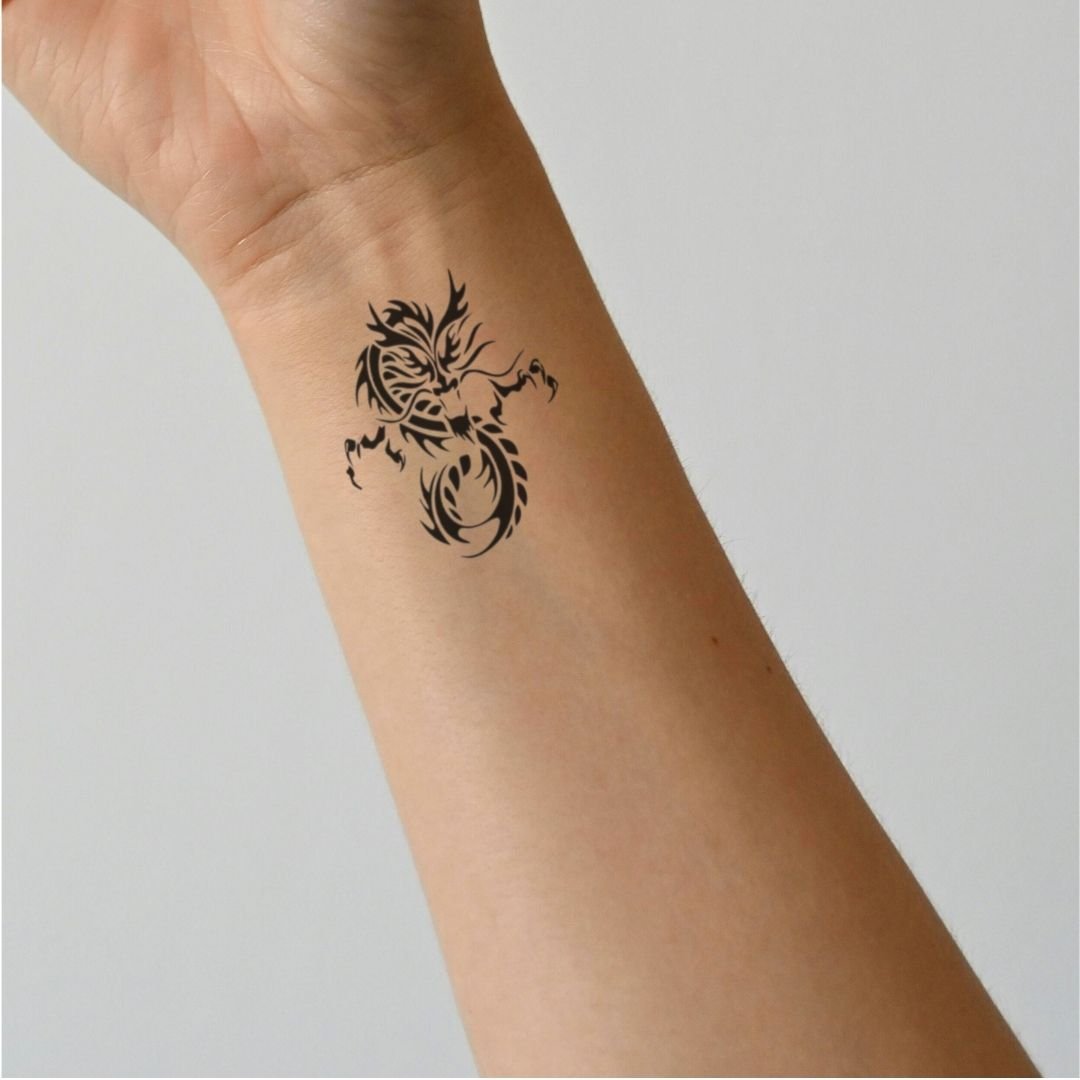
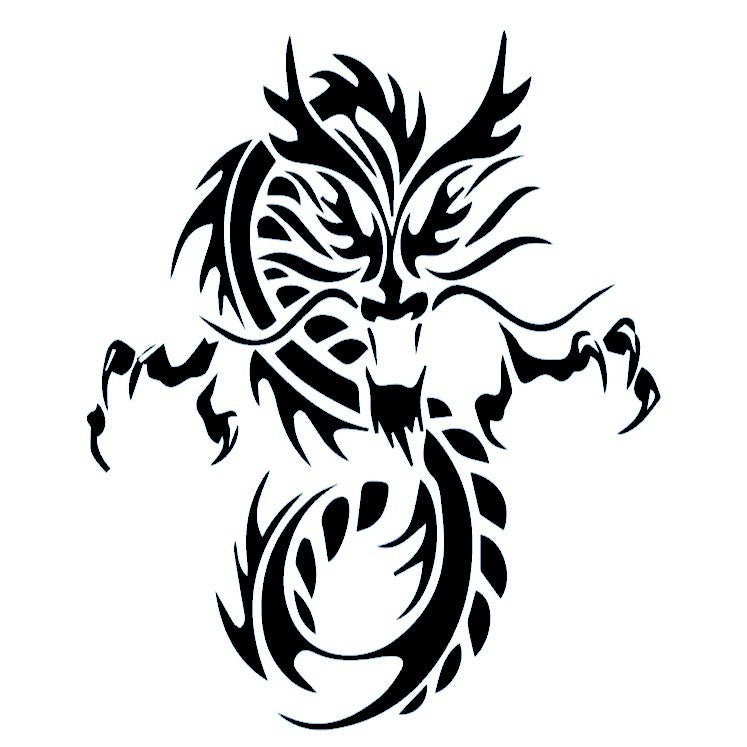
Tribal and blackwork — Bold geometric patterns, angular lines, strong contrast. Works at any size, looks modern without losing the weight.
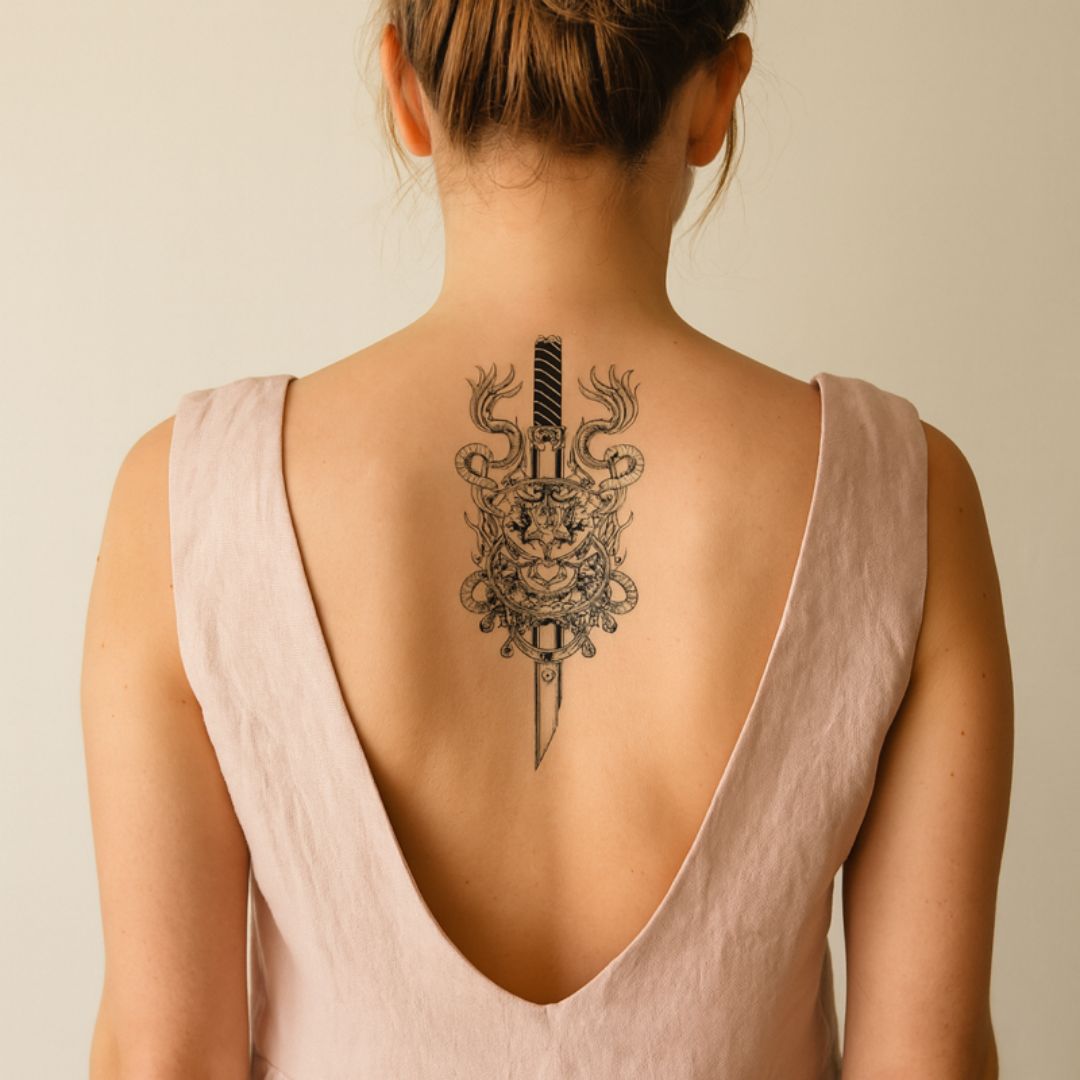
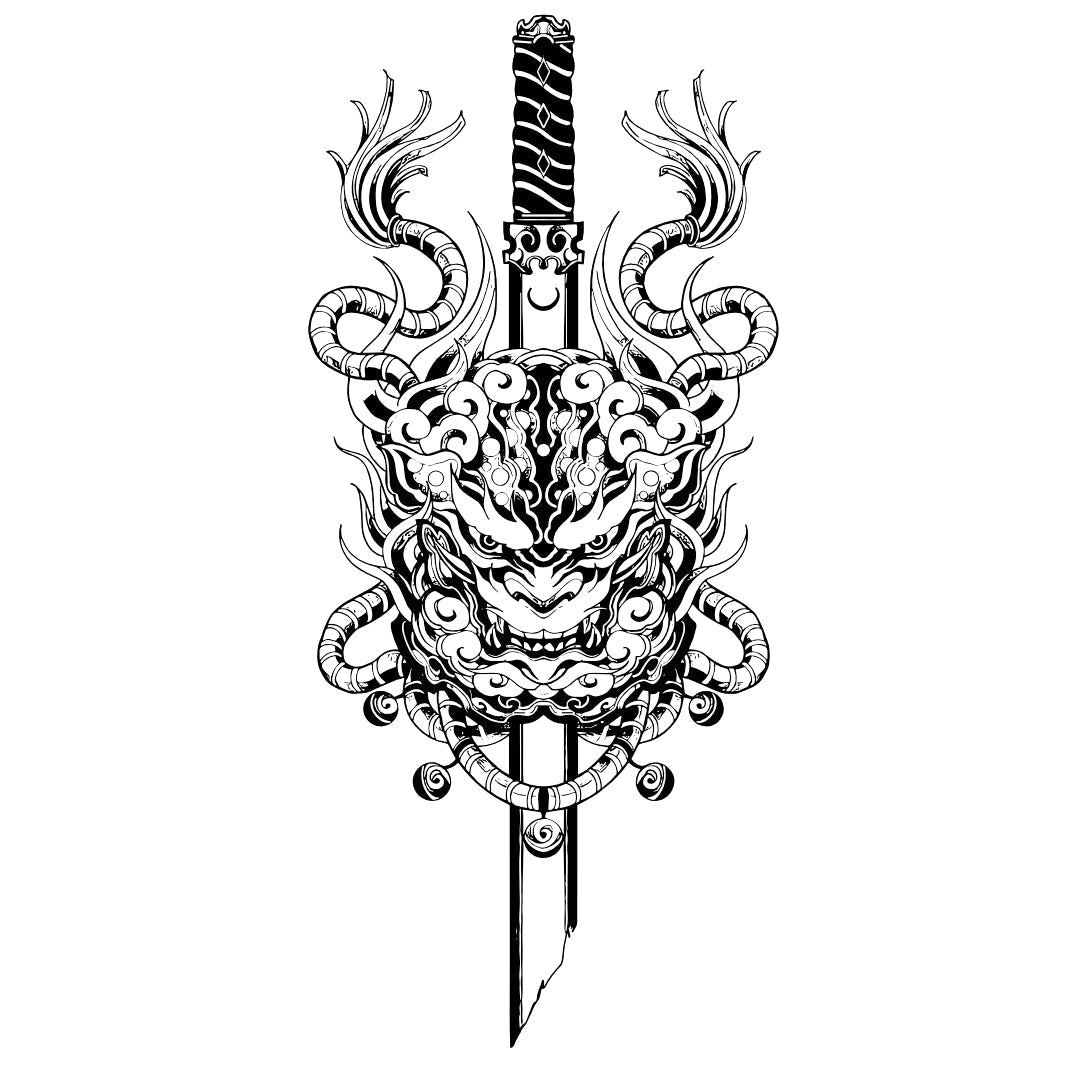
Sword dragons — Dragon wrapped around or pierced by a blade. Pairs with samurai and fantasy aesthetics — House of the Dragon energy without the commitment.
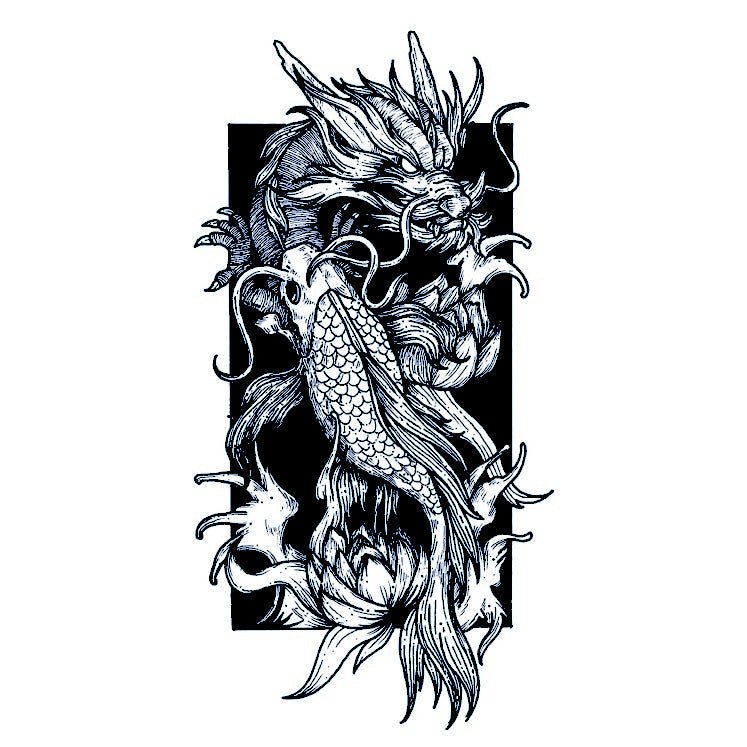
Want something specific — a koi-to-dragon transformation, a custom piece from your tattoo artist, your own drawing? Upload your design and we'll print it in real jagua ink. Custom orders from 3 copies.
Where they work best
Dragons need room to breathe. Their elongated bodies don't belong on a wrist. The forearm is the most natural placement for Japanese and Chinese styles — the length follows the arm. Upper back and shoulder blades give you space for the full serpentine form. Calves work for vertical compositions with clouds, waves, or waterfalls. Chest pieces hit different — a dragon over your heart reads as a guardian, which is exactly what it's meant to be.
Curious about what each dragon culture actually means — and how to pick one without the common mistakes? Read our dragon tattoo meaning and culture guide →
Quick answers
Do they actually look real?
Yes. Jagua stains the skin cells themselves — not a decal on the surface. Deep blue-black with a matte finish that matches the irezumi tradition. No shine, no peeling edges.
How long do they last?
7 to 15 days depending on placement and aftercare. Arms, shoulders, back, and chest hold color longest. Hands and feet fade faster from friction. Full duration guide →
Why blue-black instead of pure black?
Because that's what real tattoo ink looks like in healed skin — not on top of it. Traditional Japanese irezumi is blue-black. "Pure black" competitors sit on the surface; jagua is in your skin.
Are they safe?
Jagua is a natural fruit extract — no PPD, no synthetic dyes, no needles. Registered under EU cosmetic safety standards. Full safety info →
Can I get a Japanese dragon if I'm not Japanese?
Usually yes, if you do your homework. Dragon symbolism has been globally shared for centuries. Full breakdown of what's fine and what crosses a line is in our dragon tattoo meaning guide.
Are dragon tattoos cliché at this point?
Popular isn't cliché. Dragons are one of the most tattooed designs in the world because the symbolism is deep and works across seven cultures. What separates cliché from classic is picking intentionally — which dragon, why, and how. Meaning guide →
Do you have full-sleeve dragon designs?
Our largest dragons are medium-long format (under 10×25 cm) — good for forearm or calf pieces. For a full sleeve, upload your own design or combine several smaller ones.