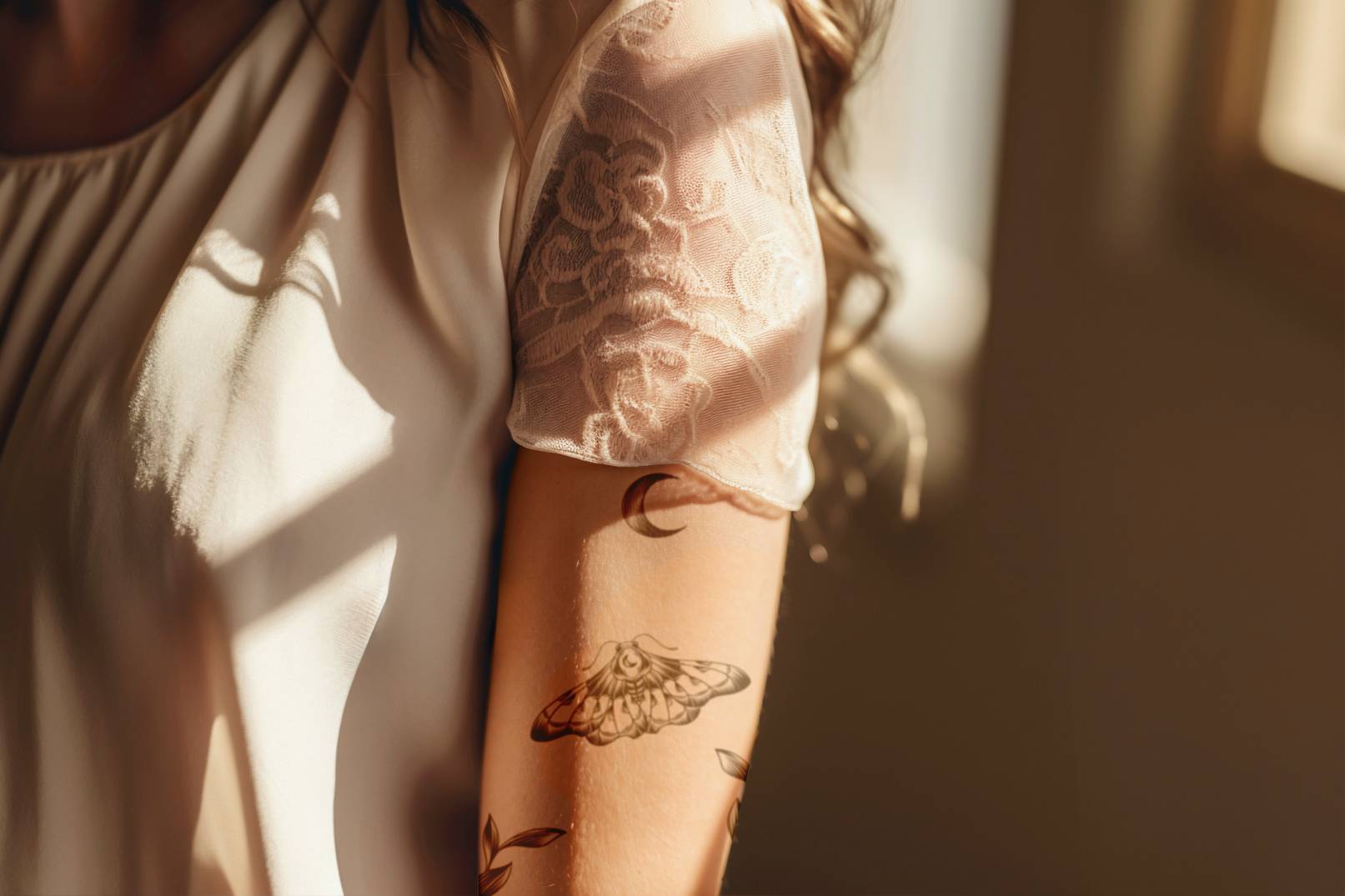


You washed off the gel and you are looking at a faint gray shadow, wondering if you ruined it. You did not. That is exactly how jagua looks at first.
What you do over the next 48 hours decides whether it turns deep blue-black and holds for two weeks, or stays pale and gives up by the weekend. Here is the whole thing, hour by hour, plus one risk in the first two nights that almost nobody warns you about.
Hour by hour
0 to 2 hours: hands off
The gel needs to sit undisturbed until fully dry. Do not bend or stretch the area, and keep tight sleeves and straps off it.
2 to 24 hours: set the stain
Wash the gel off with running, soapy water and pat dry. Do not rub, and skip baby wipes. Then keep the area dry for a few hours: no long showers, no steam, no heavy sweating. Keep perfumed products, acids, retinoids and alcohol sprays away from it.
This is where everyone panics. The moment you rinse the gel off, the stain looks faint, almost invisible. Normal. Do not reapply, do not scrub.

Days 2 to 7: deepen and protect
Over 24 to 48 hours the stain oxidizes from pale gray to deep blue-black. Once it has set, moisturize lightly with a fragrance-free lotion. Keep straps and watch bands off it, and use SPF 30+ outdoors, because UV is one of the fastest ways to fade a stain.
Days 8 to 15: maintain
Keep the skin hydrated and stay off anything abrasive. Chlorine and long hot baths speed up the fade, so rinse with fresh water afterwards. From there it fades evenly until your skin renews.
The first two nights: the ghost design nobody mentions
This is the part we get asked about most, and it is not what people expect.
For 24 to 48 hours after application, jagua is still active in your skin. If the fresh design stays in prolonged contact with another part of your body while you sleep, it can print a faint ghost of itself there. A wrist design against a thigh, an inner arm against a ribcage. It happens overnight and it is not reversible.
The fix is simple. For the first two nights, cover the area with gauze, a soft cloth or a non-adhesive bandage, and sleep so the design is not pressed against other skin.
Worth knowing, because the worry is usually misplaced: once the gel has been properly washed off, jagua does not stain sheets or clothes. The risk is skin against skin, not fabric.
What makes a stain darker
Whether your jagua goes deep blue-black or stays soft gray is not luck.
- Contact time. The biggest lever, and it happens before aftercare starts: 2 to 3 hours is the floor, 4 to 6 gives a noticeably deeper color.
- Protein. Jagua's active compound bonds to arginine, an amino acid in your skin. A protein-rich stretch around application genuinely helps. Odd, but it holds up.
- Warmth, with a caveat. Warmth speeds up the oxidation that darkens the stain, and in cold weather development can take up to 72 hours. But in hot, humid conditions the opposite problem appears: the gel can bleed and leave halos. If your skin is damp, take the gel off as soon as it is dry rather than waiting out the full window.
- No lotion for the first two days. Jagua needs oxygen to oxidize. Moisturizer, oil or SPF too early seals it off and leaves you with a lighter result. Hydrate after the color has set.
- Prep, the day before. Do not exfoliate or shave the area on application day. Scrubbing strips the keratin the dye needs to bind to, and a razor leaves the skin reactive.
Thin skin or thick skin: the trade-off
People assume one area is simply better. It is a trade-off.
Thin skin (hands, feet, fingers) takes a darker stain. But those areas renew fastest and get washed and rubbed constantly, so the design goes sooner. Expect intense color for four to seven days.
Thicker skin (upper arms, thighs, calves, shoulder blade) takes a slightly lighter stain, but holds it far longer. Twelve to fifteen days is realistic.
If you want maximum impact for a weekend, go thin. If you want the full two weeks, go thick. Full breakdown by area in our duration guide.
Showers, gym, swimming
Showers are fine after the first couple of hours. Keep them short and lukewarm at first, and pat dry.
Working out can wait 48 hours. Sweat during development lightens or patches the color.
Swimming, sauna and long baths all fade a stain faster. Before getting in the water, smooth a thin layer of petroleum jelly or balm over the design: it acts as a barrier and buys you days. The same trick works before a long shower or a night's sleep in the first week.
Troubleshooting
Still pale at 24 hours. Often darkens by 48, and up to 72 in cold weather. If it stays light beyond that, the usual causes are lotion on the skin, contact time under 2 hours, or water too soon.
Patchy or uneven. Usually an uneven gel layer, or part of the design flaking off early. Hydrate more and keep scrubs and tight clothing off it.
Blurred edges or halos. Almost always heat and humidity during drying, or movement before the gel set. Next time, remove the gel as soon as it is dry rather than waiting.
A faint copy appeared somewhere else. Skin-to-skin transfer during the first two nights. It fades on the same timeline as the original.
Want it gone sooner? See our guide on how to fade a jagua tattoo faster.
The checklist
- Do not exfoliate or shave the area on application day.
- Let the gel dry fully, then wash off with running, soapy water.
- Cover the area for the first two nights, and keep it off other skin.
- No moisturizer, oil or SPF for the first two days.
- After that: hydrate daily, SPF 30+ outdoors.
- Barrier balm before swimming or long showers.
- Keep scrubs, chlorine and friction off it throughout.

Frequently asked questions
Why is my jagua tattoo still gray?
Because it has not developed yet. The color deepens over 24 to 48 hours after you rinse the gel off, and up to 72 in cold weather. If it stays pale beyond that, the usual causes are lotion or oil on the skin, contact time under two hours, or water too soon.
How do I make my jagua stain darker?
Longer contact time before you rinse (4 to 6 hours rather than 2), warmth while it develops, and no moisturizer for the first two days so it can oxidize. A protein-rich diet around application helps too, since jagua binds to arginine in your skin.
My design copied itself onto another part of my body. Why?
Jagua stays active for 24 to 48 hours after application. If the fresh design presses against other skin overnight, it prints a faint copy there. Cover the area with gauze or a soft cloth for the first two nights. The copy fades on the same timeline as the original.
Will jagua stain my sheets or clothes?
Not once the gel has been properly washed off. The real risk in the first two nights is skin against skin, not fabric. Make sure no gel residue is left before you go to bed.
Can I shower and swim with a jagua tattoo?
Yes, once the gel is off and the color has set. Keep early showers short and lukewarm. Before swimming or a long soak, smooth a thin layer of petroleum jelly or balm over the design as a barrier.
Should I moisturize it, and when?
Not for the first two days, since the color needs oxygen to develop. Once it has set, a light fragrance-free moisturizer daily makes it look richer and slows flaking.
Does it last longer on hands or on arms?
Arms. Thin skin like hands and feet takes a darker stain but renews fastest, so expect four to seven days. Thicker skin on upper arms, thighs and calves takes a slightly lighter stain but holds it twelve to fifteen days.
Can I put sunscreen on it?
Not in the first two days. After the color has set, yes, and you should: SPF 30+ reapplied is one of the best ways to slow fading.
How long will it last?
Seven to fifteen days depending on placement and how you treat it. Full breakdown by body area in our duration guide.